Latest Discoveries on MOTS-c Peptide Therapy
A guide to the latest discoveries on MOTS-c peptide therapy. Covers what MOTS-c is and how it regulates metabolic function through AMPK activation, biological role of mitochondrial-derived peptides in metabolism, mechanism of action in cellular energy regulation via the Folate-AICAR-AMPK pathway, clinical evidence from recent studies and a 2024 systematic review/meta-analysis examining MOTS-c levels across physiological and pathological states, summary of 2024-2026 clinical trial findings on insulin sensitivity and weight management, physician-supervised personalized treatment plans, metabolic health and weight management benefits, impact on insulin sensitivity and exercise performance, anti-aging effects and mitochondrial peptide influence on healthy aging, and FSA/HSA eligibility.
MOTS-c peptide therapy is emerging as a groundbreaking approach in metabolic health, offering potential benefits for energy enhancement, weight management, and healthy aging. This article delves into the latest discoveries surrounding MOTS-c, a mitochondrial-derived peptide that plays a crucial role in regulating metabolic functions.
MOTS-C peptide is a mitochondrial-derived peptide that plays a crucial role in cellular energy metabolism and longevity. This powerful peptide helps regulate glucose metabolism, enhance insulin sensitivity, and promote healthy aging processes. Research shows MOTS-C may support weight management, improve exercise performance, and protect against age-related metabolic decline.
What is MOTS-c Peptide and How Does It Regulate Metabolic Function?
MOTS-c peptide is a mitochondrial-derived peptide that plays a significant role in metabolic regulation. It functions by activating AMP-activated protein kinase (AMPK), a critical energy sensor in cells that helps maintain energy homeostasis. By enhancing AMPK activation, MOTS-c promotes glucose uptake and fatty acid oxidation, leading to improved metabolic health.
Biological Role of Mitochondrial-Derived Peptides in Metabolism
Mitochondrial-derived peptides, including MOTS-c, are essential for maintaining metabolic balance. These peptides influence various biological processes, such as energy production, cellular signaling, and the regulation of metabolic pathways. By modulating these processes, mitochondrial peptides contribute to energy homeostasis and metabolic health.
Mechanism of Action in Cellular Energy Regulation
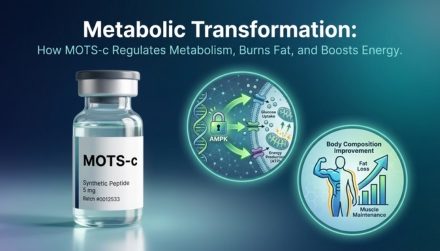
The mechanism of action of MOTS-c involves the activation of AMPK, which enhances cellular energy regulation. When activated, AMPK stimulates glucose uptake and promotes the oxidation of fatty acids, leading to increased energy production. MOTS-c also enhances mitochondrial function, crucial for optimal energy metabolism.
MOTS-c Mechanisms: Metabolism, Aging & Stress Homeostasis
MOTS-c mainly acts through the Folate-AICAR-AMPK pathway, thereby influencing energy metabolism, insulin resistance, inflammatory response, exercise, aging and aging-related pathologies. Because of the potential role of MOTS-c in maintaining energy and stress homeostasis to promote healthy aging, especially in view of the increasing aging of the global population, it is highly pertinent to summarize the relevant studies.
-- Mitochondria-derived peptide MOTS-c: effects and mechanisms related to stress, metabolism and aging, 2015
| Category | Detail | Discovery Significance |
|---|---|---|
| Mechanism -- AMPK | Activates via Folate-AICAR-AMPK pathway | Core metabolic regulation mechanism confirmed |
| Mechanism -- Mitochondrial | Enhances mitochondrial function and energy production | Supports cellular energy and reduces fat accumulation |
| Mechanism -- Stress Response | Influences aging, inflammation, and exercise pathways | Maintains energy and stress homeostasis |
| Evidence -- 2024 Meta-Analysis | Strong relationship with metabolic homeostasis | Protection against insulin resistance confirmed across populations |
| Evidence -- 2024-2026 Trials | Significant improvements in insulin sensitivity and weight | Translating preclinical promise to human outcomes |
| Evidence -- Preclinical | Positive influence on insulin sensitivity and glucose metabolism | Foundation for clinical trial design |
What clinical evidence supports MOTS-c therapy safety and efficacy?
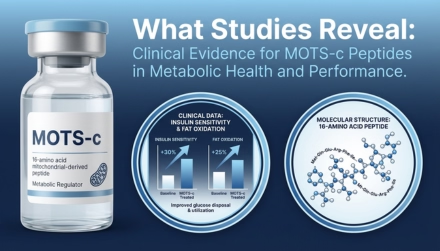
Clinical evidence is growing. Preclinical studies show MOTS-c positively influences insulin sensitivity and glucose metabolism. A 2024 systematic review and meta-analysis confirms a strong relationship between MOTS-c levels and metabolic homeostasis, with protection against insulin resistance. Ongoing clinical trials continue investigating its safety profile.
What do recent 2024-2026 clinical trials show?
Key findings indicate participants experienced significant improvements in insulin sensitivity and weight management. These trials highlight MOTS-c's potential as a therapeutic agent for metabolic disorders, paving the way for future research and clinical applications.
How does MOTS-c benefit metabolic health and weight management?
By enhancing AMPK activation, MOTS-c promotes better glucose metabolism and fat oxidation, leading to weight loss and improved energy levels. It also supports insulin sensitivity, making it valuable for individuals struggling with metabolic disorders.
What impact does MOTS-c have on insulin sensitivity?
MOTS-c positively impacts insulin sensitivity by enhancing glucose uptake in cells. Improved insulin sensitivity helps regulate blood sugar levels and reduces the risk of developing type 2 diabetes, contributing to better metabolic regulation.
What are the anti-aging effects of MOTS-c?
MOTS-c and related peptide treatments may counteract age-related metabolic decline by improving mitochondrial function and enhancing energy metabolism. They support cellular function and protect against age-related decline, promoting longevity and vitality.
How can patients access MOTS-c therapy and what are payment options?
Patients access therapy through physician-supervised treatment plans ensuring appropriate dosing and monitoring. FSA/HSA may be eligible for payment. Check with insurance providers regarding coverage for peptide therapies.
What Clinical Evidence Supports MOTS-c?
Clinical evidence supporting MOTS-c is growing. Preclinical studies have shown it can positively influence insulin sensitivity and glucose metabolism. Ongoing clinical trials are further investigating its safety profile and therapeutic applications.
MOTS-c & Metabolic States: A Meta-Analysis
There is growing evidence that MOTS-c has a strong relationship with the expression of inflammation- and metabolism-associated genes and metabolic homeostasis, and even offering some protection against insulin resistance (IR). However, studies have reported inconsistent correlations between different population characteristics and MOTS-c levels. This meta-analysis aims to elucidate MOTS-c levels in physiological and pathological states, and its correlation with metabolic features in various physiological states.
-- The correlation between mitochondrial derived peptide (MDP) and metabolic states: a systematic review and meta-analysis, 2024
| Category | Detail | Guidance |
|---|---|---|
| Benefit -- Metabolic Health | Better glucose metabolism and fat oxidation via AMPK | Supports weight loss and improved energy |
| Benefit -- Insulin Sensitivity | Enhances glucose uptake in cells | Reduces type 2 diabetes risk |
| Benefit -- Exercise Performance | Improves mitochondrial function and endurance | Reduces fatigue during physical activity |
| Anti-Aging -- Mitochondrial | Counteracts age-related metabolic decline | Improves energy metabolism with age |
| Anti-Aging -- Cellular | Supports cellular function and protects against decline | Promotes longevity and vitality |
| Anti-Aging -- Older Adults | Improved insulin sensitivity, weight, and exercise performance | Evidence-based benefits for aging populations |
| Access -- Treatment Plans | Physician-supervised personalized protocols | Dosing, monitoring, and safety tailored to individual |
| Access -- FSA/HSA | May be eligible for payment | Check with insurance provider |
Summary of Recent 2024-2026 Clinical Trials
Recent clinical trials from 2024 to 2026 have focused on the effects of MOTS-c on metabolic health. Key findings indicate participants experienced significant improvements in insulin sensitivity and weight management. These trials highlight the potential of MOTS-c as a therapeutic agent for metabolic disorders.
Physician-Supervised Treatment Plans
Physician-supervised treatment plans are essential for ensuring safety and effectiveness. These plans allow for personalized dosing and monitoring, optimizing therapeutic outcomes. Physicians tailor treatment protocols based on individual patient needs, metabolic health, lifestyle, and specific health goals.
How Does MOTS-c Benefit Metabolic Health and Weight Management?
MOTS-c promotes better glucose metabolism and fat oxidation through AMPK activation, leading to weight loss and improved energy levels. It also supports insulin sensitivity.
Impact on Insulin Sensitivity and Metabolic Regulation
MOTS-c positively impacts insulin sensitivity, crucial for maintaining metabolic health. Improved insulin sensitivity helps regulate blood sugar levels and reduces the risk of developing type 2 diabetes.
Role in Enhancing Exercise Performance and Energy Levels
MOTS-c improves mitochondrial function and energy production, increasing endurance and reducing fatigue during physical activity. This makes it attractive for athletes and active individuals.
Anti-Aging Effects of MOTS-c
MOTS-c and related peptide treatments have shown potential anti-aging effects, particularly in metabolic health. These peptides may counteract age-related metabolic decline by improving mitochondrial function and enhancing energy metabolism. Mitochondrial peptides, including MOTS-c, support cellular function and protect against age-related decline, promoting longevity and vitality. Evidence-based research highlights benefits in addressing age-related metabolic decline, including improved insulin sensitivity, weight management support, and enhanced exercise performance in older adults.
Conclusion
The latest MOTS-c discoveries reinforce what earlier research suggested, but with stronger evidence: the 2024 systematic review and meta-analysis confirms MOTS-c's relationship with metabolic homeostasis and insulin resistance protection across populations. Clinical trials from 2024-2026 are translating preclinical promise into human outcomes, with participants showing improved insulin sensitivity and weight management. The mechanistic picture remains consistent -- Folate-AICAR-AMPK pathway activation drives the metabolic effects. What's new is the depth of evidence: meta-analytic validation across population characteristics, expanded clinical trial data, and growing recognition of mitochondrial-derived peptides as a therapeutic class. Under physician supervision with personalized protocols, MOTS-c therapy is positioned at the frontier of metabolic health optimization.
Disclaimer: This information is for educational purposes only and does not constitute medical advice. MOTS-c is a peptide therapy not currently FDA-approved. Always consult a licensed healthcare provider before starting, stopping, or changing any treatment. Individual results vary.