How MOTS-c Therapy Could Transform Your Health
A guide to how MOTS-c therapy could transform your health. Covers what MOTS-c peptide therapy is and how it regulates metabolism through AMPK activation, the role of mitochondrial-derived peptides in metabolic health, how MOTS-c influences mitochondrial function and energy production, clinical benefits (metabolic optimization, improved insulin sensitivity, weight management), mechanisms behind fat metabolism and exercise performance effects, MOTS-c as a potential exercise mimic with evidence from diabetic heart function studies, patient outcomes for energy and metabolic regulation, healthy aging benefits including cellular aging and mitochondrial health, scientific evidence linking MOTS-c to longevity and physical performance across age groups, and subscription plans with FSA/HSA eligibility.
MOTS-c therapy represents a groundbreaking approach to metabolic health optimization, leveraging the power of mitochondrial-derived peptides to enhance overall well-being. This article explores the mechanisms, benefits, and applications of MOTS-c peptide therapy and how it can transform your health.
What Is MOTS-c Peptide Therapy and How Does It Regulate Metabolism?
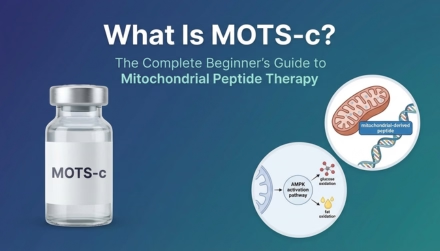
MOTS-c peptide therapy is a novel treatment that utilizes mitochondrial-derived peptides to regulate metabolism and enhance metabolic health. By activating the AMP-activated protein kinase (AMPK) pathway, MOTS-c plays a crucial role in energy homeostasis and metabolic regulation. This mechanism helps optimize energy production and supports various metabolic functions, including enhanced insulin sensitivity and weight management.
MOTS-c: Mitochondrial Peptide for Metabolic Health & Insulin Resistance
MOTS-c is known as mitochondrial open reading frame (ORF) of the twelve S c, produced by a small ORF-encoded peptides (SEPs) in mitochondrial 12S rRNA region. There is growing evidence that MOTS-c has a strong relationship with the expression of inflammation- and metabolism-associated genes and metabolic homeostasis, and even offering some protection against insulin resistance (IR).
-- The correlation between mitochondrial derived peptide (MDP) and metabolic states: a systematic review and meta-analysis, 2024
Understanding Mitochondrial-Derived Peptides in Metabolic Health
Mitochondrial-derived peptides, such as MOTS-c, are essential for maintaining metabolic health. These peptides are produced by mitochondria and regulate various metabolic processes. As individuals age, their levels can decline, leading to metabolic dysfunction and increased chronic disease risk.
| Category | Detail | Transformation Impact |
|---|---|---|
| Mechanism -- AMPK Activation | Activates cellular energy homeostasis regulator | Optimized energy production and metabolic efficiency |
| Mechanism -- Mitochondrial | Enhances mitochondrial function and biogenesis | Improved energy levels and cellular health |
| Mechanism -- Exercise Mimic | Mimics exercise effects on metabolism and cardiac function | Benefits for diabetic heart function (2023 study) |
| Clinical -- Metabolic Optimization | Enhances metabolic processes and energy | Moderate evidence |
| Clinical -- Insulin Sensitivity | Supports glucose regulation; reduces insulin resistance | Moderate evidence; confirmed in 2024 meta-analysis |
| Clinical -- Weight Management | Fat loss and lean muscle mass promotion | Moderate evidence |
| Evidence -- 2024 Meta-Analysis | Strong relationship with metabolic homeostasis | Protection against insulin resistance confirmed |
How MOTS-c Influences Mitochondrial Function and Energy Production
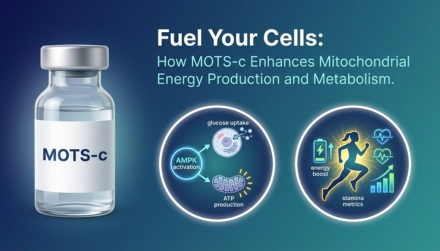
MOTS-c significantly influences mitochondrial function by enhancing energy production and metabolic balance. It activates AMPK, leading to improved glucose uptake and fatty acid oxidation, thereby optimizing energy utilization within the body.
What Are the Clinical Benefits of Physician-Supervised MOTS-c Therapy?
- Metabolic Optimization: Enhances metabolic processes, leading to improved energy levels and weight management.
- Improved Insulin Sensitivity: Supports better glucose regulation, reducing insulin resistance risk.
- Weight Management: Aids in fat loss and promotes lean muscle mass for healthier body composition.
How does MOTS-c support weight management and energy optimization?
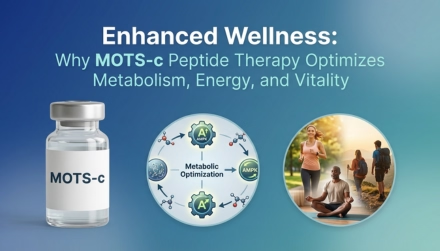
MOTS-c enhances mitochondrial function and promotes fat oxidation, helping individuals achieve weight loss goals more effectively. It also improves energy levels, allowing for more physical activity that further supports weight management. This dual action makes MOTS-c a powerful tool for a healthier lifestyle.
What are the mechanisms behind MOTS-c's effects on fat metabolism and exercise performance?
MOTS-c enhances fat oxidation, allowing the body to use stored fat as energy during physical activity. This aids weight loss and improves exercise performance by increasing endurance and reducing fatigue. Research shows it may act as an "exercise mimic" improving metabolic health.
How can MOTS-c promote healthy aging?
MOTS-c counteracts age-related metabolic decline by enhancing mitochondrial health and supporting metabolic processes. Late-life intermittent MOTS-c treatment (3x/week) increased physical capacity and healthspan in mice. In humans, exercise induces endogenous MOTS-c expression in skeletal muscle and circulation.
What is the evidence linking MOTS-c to longevity?
Studies show MOTS-c significantly enhances physical performance in young (2 mo.), middle-aged (12 mo.), and old (22 mo.) mice. It regulates nuclear genes related to metabolism and proteostasis, improves skeletal muscle metabolism, and supports myoblast adaptation to metabolic stress.
How does physician supervision enhance MOTS-c therapy?
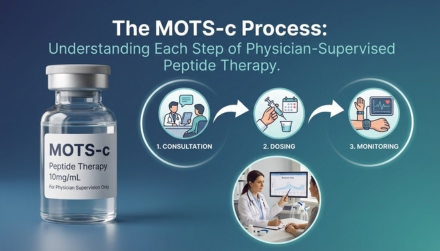
Healthcare providers monitor patient progress, adjust dosages, and ensure therapy is tailored to individual needs. This oversight mitigates risks and enhances effectiveness. Personalized treatment plans account for individual health profiles, metabolic conditions, and specific goals.
Mechanisms Behind MOTS-c Effects on Fat Metabolism and Exercise Performance
MOTS-c enhances fat oxidation, allowing the body to utilize stored fat as energy during physical activity. This aids weight loss and improves exercise performance by increasing endurance and reducing fatigue.
MOTS-c: Exercise Mimic for Diabetes & Metabolic Health
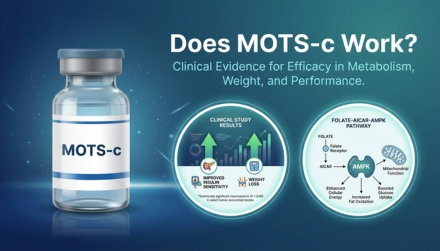
MOTS-c is a potential exercise mimic. This study aimed to investigate the effects of MOTS-c on improving diabetic heart function and its mechanism. The results showed that MOTS-c, with or without exercise, reduced myocardial ultrastructural damage and improved glucolipid metabolism and cardiac function in T2DM. Our findings suggest that MOTS-c may be a helpful supplement for overcoming exercise insufficiency and improving myocardial structure and function in diabetes.
-- The role of MOTS-c-mediated antioxidant defense in aerobic exercise alleviating diabetic myocardial injury, 2023
| Category | Detail | Guidance |
|---|---|---|
| Aging -- Physical Performance | Enhanced in young, middle-aged, and old mice | Exercise-induced MOTS-c expression in human muscle |
| Aging -- Late-Life Treatment | Intermittent 3x/week increased healthspan in mice | Potential for age-dependent physical decline mitigation |
| Aging -- Cellular | Promotes mitochondrial biogenesis and function | Reduces age-related disease risk |
| Outcome -- Energy | Significant improvements in energy levels | Increased mitochondrial energy production |
| Outcome -- Metabolic Regulation | Stable blood sugar levels; improved metabolic markers | Enhanced overall health and quality of life |
| Access -- Subscription Plans | Personalized treatment with ongoing support | Regular consultations and treatment adjustments |
| Access -- FSA/HSA | May be eligible for reimbursement | Reduces out-of-pocket costs |
Patient Outcomes: Improved Energy and Metabolic Regulation
Patients undergoing MOTS-c therapy often report significant improvements in energy levels and metabolic regulation. Enhanced mitochondrial function leads to increased energy production, and improved metabolic regulation helps maintain stable blood sugar levels.
How Can MOTS-c Promote Healthy Aging?
MOTS-c promotes healthy aging by counteracting age-related metabolic decline. It enhances mitochondrial biogenesis and function, maintains cellular energy levels, and reduces age-related disease risk.
MOTS-c: Mitochondrial Peptide for Physical Performance & Healthy Aging
Here, we report that mitochondrial-encoded MOTS-c can significantly enhance physical performance in young (2 mo.), middle-age (12 mo.), and old (22 mo.) mice. MOTS-c can regulate (i) nuclear genes, including those related to metabolism and proteostasis, (ii) skeletal muscle metabolism, and (iii) myoblast adaptation to metabolic stress. We provide evidence that late-life (23.5 mo.) initiated intermittent MOTS-c treatment (3x/week) can increase physical capacity and healthspan in mice. In humans, exercise induces endogenous MOTS-c expression in skeletal muscle and in circulation.
-- MOTS-c is an exercise-induced mitochondrial-encoded regulator of age-dependent physical decline and muscle homeostasis, JST Woodhead, 2021
Subscription Plans and Financial Options
Various subscription plans are available with personalized treatment and ongoing support. Many patients are eligible for FSA/HSA reimbursement, reducing out-of-pocket costs and making MOTS-c therapy more accessible.
Conclusion
MOTS-c therapy's transformative potential comes from its position at the intersection of three critical health pathways: metabolic regulation through AMPK, exercise-mimetic effects that improve cardiac and muscular function, and anti-aging activity through mitochondrial biogenesis. The evidence is converging from multiple directions -- a 2024 systematic review confirming metabolic homeostasis relationships, 2023 research showing exercise-mimic benefits for diabetic heart function, and 2021 data demonstrating enhanced physical capacity across all age groups in mice (with endogenous MOTS-c expression confirmed in exercising humans). Under physician supervision with personalized plans, MOTS-c therapy offers a multi-pathway approach to metabolic health transformation.
Disclaimer: This information is for educational purposes only and does not constitute medical advice. MOTS-c is a peptide therapy not currently FDA-approved. Always consult a licensed healthcare provider before starting, stopping, or changing any treatment. Individual results vary.