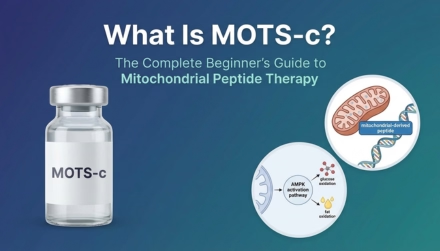
MOTS-c Peptide Therapy: Comprehensive Guide to Efficacy and Safety for Metabolic Health
A comprehensive guide to MOTS-c peptide therapy efficacy and safety. Covers what MOTS-c is and how it works as a mitochondrial-derived peptide, its role in metabolic regulation through the Folate-AICAR-AMPK pathway, how it influences mitochondrial function and energy production, clinical evidence from studies on insulin sensitivity and obesity/diabetes models, adiponectin pathway research and exercise interactions, safety profile and common side effects (GI discomfort, injection site reactions), physician supervision importance, personalized treatment plans with tailored dosing, healthy aging and metabolic syndrome prevention, exercise performance enhancement, and cost/FSA/HSA considerations.
MOTS-c peptide therapy is an innovative approach to enhancing metabolic health, leveraging the unique properties of the MOTS-c peptide. This therapy aims to improve energy production, regulate metabolism, and support weight management. This guide explores the mechanisms behind MOTS-c, its efficacy, and safety considerations.
What is MOTS-c Peptide Therapy and How Does It Work?
MOTS-c peptide therapy involves the administration of the MOTS-c peptide, derived from mitochondrial DNA. It enhances mitochondrial function, promotes energy production, and improves insulin sensitivity. The therapy works by mimicking the effects of exercise, activating pathways that enhance metabolic efficiency and promote weight loss.
Understanding the MOTS-c Peptide and Its Role in Metabolic Regulation
The MOTS-c peptide is a 16-amino acid peptide encoded by mitochondrial DNA. It enhances glucose metabolism and promotes the utilization of fatty acids for energy. MOTS-c also reduces inflammation and oxidative stress, contributing to overall metabolic health.
MOTS-c: Mechanisms for Energy Metabolism & Insulin Resistance
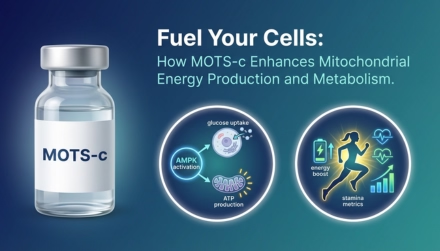
MOTS-c is a peptide encoded by the short open reading frame of the mitochondrial 12S rRNA gene. It is significantly expressed in response to stress or exercise and translocated to the nucleus, where it regulates the expression of stress adaptation-related genes with antioxidant response elements (ARE). MOTS-c mainly acts through the Folate-AICAR-AMPK pathway, thereby influencing energy metabolism, insulin resistance, inflammatory response, exercise, aging and aging-related pathologies.
-- Mitochondria-derived peptide MOTS-c: effects and mechanisms related to stress, metabolism and aging, 2015
| Study/Mechanism | Findings | Conclusion |
|---|---|---|
| Insulin Sensitivity Study | Improved insulin sensitivity in obese participants | MOTS-c effective for metabolic regulation |
| Exercise Performance Study | Enhanced performance and recovery in athletes | MOTS-c supports physical performance |
| Weight Management Study | Observable weight loss among participants | MOTS-c aids in weight management |
| OVX Mouse Model (2019) | Prevented obesity; increased brown fat activation | AMPK activation improved energy dissipation |
| Adiponectin Pathway (2020) | Adiponectin regulates MOTS-c production in skeletal muscle | Exercise and adiponectin improve insulin resistance via MOTS-c |
| Folate-AICAR-AMPK Mechanism | Pathway activation drives glucose uptake, fat oxidation | Core mechanism for metabolic enhancement |
How MOTS-c Influences Mitochondrial Function and Energy Production
MOTS-c significantly influences mitochondrial function by enhancing mitochondrial biogenesis, leading to increased energy production and improved metabolic efficiency. By promoting mitochondrial health, MOTS-c supports effective nutrient utilization, weight management, and overall metabolic function.
What Clinical Evidence Supports MOTS-c Efficacy?
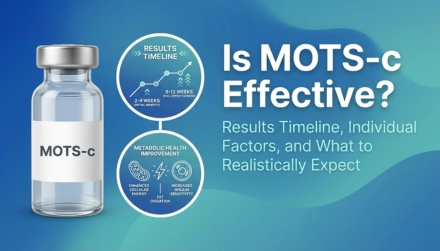
Clinical evidence supporting MOTS-c is growing. Research indicates it can improve insulin sensitivity, promote weight loss, and enhance exercise performance and recovery.
MOTS-c Improves Insulin Resistance in Obesity & Diabetes
MOTS-c (mitochondrial open reading frame of the 12S rRNA) is a biologically active mitochondrial-derived peptide encoded by mitochondrial DNA. It influences the mechanisms of obesity and diabetes. We hypothesised that the adiponectin pathway may regulate the production and/or secretion of MOTS-c in skeletal muscle. We aimed to determine whether exercise and adiponectin affect MOTS-c to improve insulin resistance in mice.
-- Adiponectin treatment improves insulin resistance in mice by regulating the expression of the mitochondrial-derived peptide MOTS-c and its response to exercise via ..., 2020
What do recent clinical trials show about MOTS-c outcomes?
Participants report significant improvements in metabolic markers, including reduced body fat percentage and increased lean muscle mass. Safety profiles have been favorable with minimal side effects. Studies demonstrate improved insulin sensitivity in obese patients, enhanced exercise performance in athletes, and observable weight loss.
How does MOTS-c therapy improve metabolic function and weight management?
MOTS-c promotes oxidation of fatty acids and glucose, leading to improved energy levels and weight management. By mimicking exercise effects, MOTS-c helps individuals achieve weight loss goals more effectively. Clinical evidence supports incorporating MOTS-c into personalized metabolic treatment plans.
How safe is MOTS-c peptide therapy?
Current research indicates MOTS-c is well-tolerated with few reported side effects. Common side effects include mild GI discomfort (usually resolves quickly), injection site reactions (redness or swelling), and rare allergic reactions. Physician supervision ensures appropriate monitoring throughout treatment.
What are the benefits of personalized physician-supervised MOTS-c treatment?
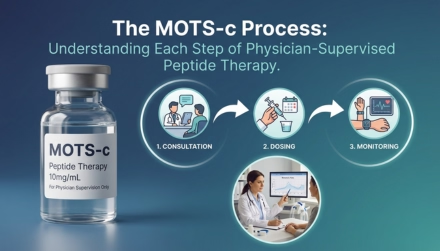
Benefits include tailored dosage based on individual needs and responses, continuous monitoring with regular check-ins for timely adjustments, and comprehensive support including guidance on lifestyle changes and complementary therapies.
How does MOTS-c support healthy aging?
MOTS-c promotes metabolic regulation and reduces age-related metabolic disorder risk. It enhances mitochondrial function to maintain energy levels, improves insulin sensitivity to prevent metabolic syndrome, and reduces inflammation, all of which contribute to improved quality of life and longevity.
What are the cost considerations and FSA/HSA eligibility?
Costs vary based on treatment plans and providers. Many patients can use HSA or FSA to cover some expenses. Check with your insurance provider for coverage options and out-of-pocket costs. Long-term health benefits often outweigh the initial financial investment.
How MOTS-c Therapy Improves Metabolic Function and Weight Management
MOTS-c therapy improves metabolic function by enhancing the body's ability to utilize energy efficiently, promoting fatty acid and glucose oxidation. By mimicking exercise effects, MOTS-c helps individuals achieve weight loss goals more effectively.
MOTS-c Treatment Prevents Obesity & Insulin Resistance
MOTS-c treatment in mice prevented ovariectomy-induced obesity and insulin resistance. MOTS-c treatment increased brown fat activation and reduced OVX-induced fat accumulation and inflammatory invasion in white adipose tissue. Moreover, MOTS-c activated AMPK pathway to improve energy dissipation and insulin sensitivity. In conclusion, MOTS-c is a high potential candidate for chronic treatment of menopausal induced metabolic dysfunction.
-- MOTS-c peptide regulates adipose homeostasis to prevent ovariectomy-induced metabolic dysfunction, 2019
| Category | Detail | Guidance |
|---|---|---|
| Safety -- GI Effects | Mild nausea or discomfort | Usually resolves quickly |
| Safety -- Injection Site | Redness or swelling possible | Rotate injection sites |
| Safety -- Allergic | Rare allergic reactions | Report immediately to provider |
| Supervision -- Dosing | Tailored to individual needs and responses | Physician adjusts based on progress |
| Supervision -- Monitoring | Regular check-ins and evaluations | Timely adjustments to treatment plan |
| Supervision -- Screening | Contraindication evaluation | Medical history review before starting |
| Access -- FSA/HSA | May cover some therapy costs | Verify with insurance provider |
| Access -- Cost-Benefit | Long-term health benefits vs initial investment | Personalized plans optimize value |
How Safe is MOTS-c Peptide Therapy?
Current research indicates MOTS-c is well-tolerated with few reported side effects:
- Gastrointestinal Issues: Mild nausea or discomfort that usually subsides quickly.
- Injection Site Reactions: Some patients may experience redness or swelling.
- Allergic Reactions: Rarely, individuals may have allergic reactions.
Personalized Physician-Supervised Treatment Plans
- Tailored Dosage: Physicians adjust dosages based on individual patient needs and responses.
- Continuous Monitoring: Regular check-ins allow for timely adjustments.
- Comprehensive Support: Patients receive guidance on lifestyle changes and complementary therapies.
MOTS-c for Healthy Aging and Metabolic Syndrome Prevention
MOTS-c supports healthy aging by promoting metabolic regulation and reducing age-related metabolic disorder risk. It enhances mitochondrial function, improves insulin sensitivity, and reduces inflammation -- addressing the core mechanisms linking aging to metabolic decline.
Conclusion
MOTS-c peptide therapy brings together two strong evidence threads: mechanistic clarity (Folate-AICAR-AMPK pathway, mitochondrial biogenesis, exercise-mimetic effects) and growing clinical validation (prevented obesity in animal models, improved insulin resistance via adiponectin pathway, reduced body fat in trial participants). The safety profile is favorable -- mild GI discomfort and injection site reactions with rare allergic responses. What makes MOTS-c particularly compelling is that it addresses metabolic health at the mitochondrial source rather than treating downstream symptoms. Under physician supervision with personalized dosing, it represents a research-backed approach for metabolic optimization, weight management, and healthy aging.
Disclaimer: This information is for educational purposes only and does not constitute medical advice. MOTS-c is a peptide therapy not currently FDA-approved. Always consult a licensed healthcare provider before starting, stopping, or changing any treatment. Individual results vary.