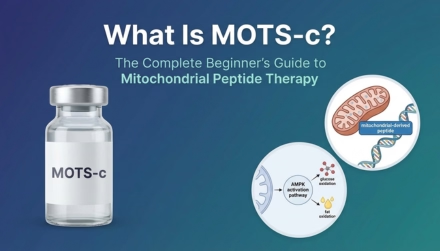
Understanding the MOTS-c Therapy Process
A guide to understanding the MOTS-c therapy process. Covers what MOTS-c peptide is and how it regulates metabolism through AMPK activation, biological role in mitochondrial function, mechanisms of metabolic enhancement (glucose uptake, fatty acid oxidation, metabolic flexibility), the physician-supervised therapy process (consultation, dosing protocols, monitoring), clinically supported benefits (insulin sensitivity, weight management, exercise performance), improvement in metabolic function and energy levels, effects on weight management and healthy aging, subscription plans and pricing, FSA/HSA eligibility, safety profile and side effects, and common patient questions.
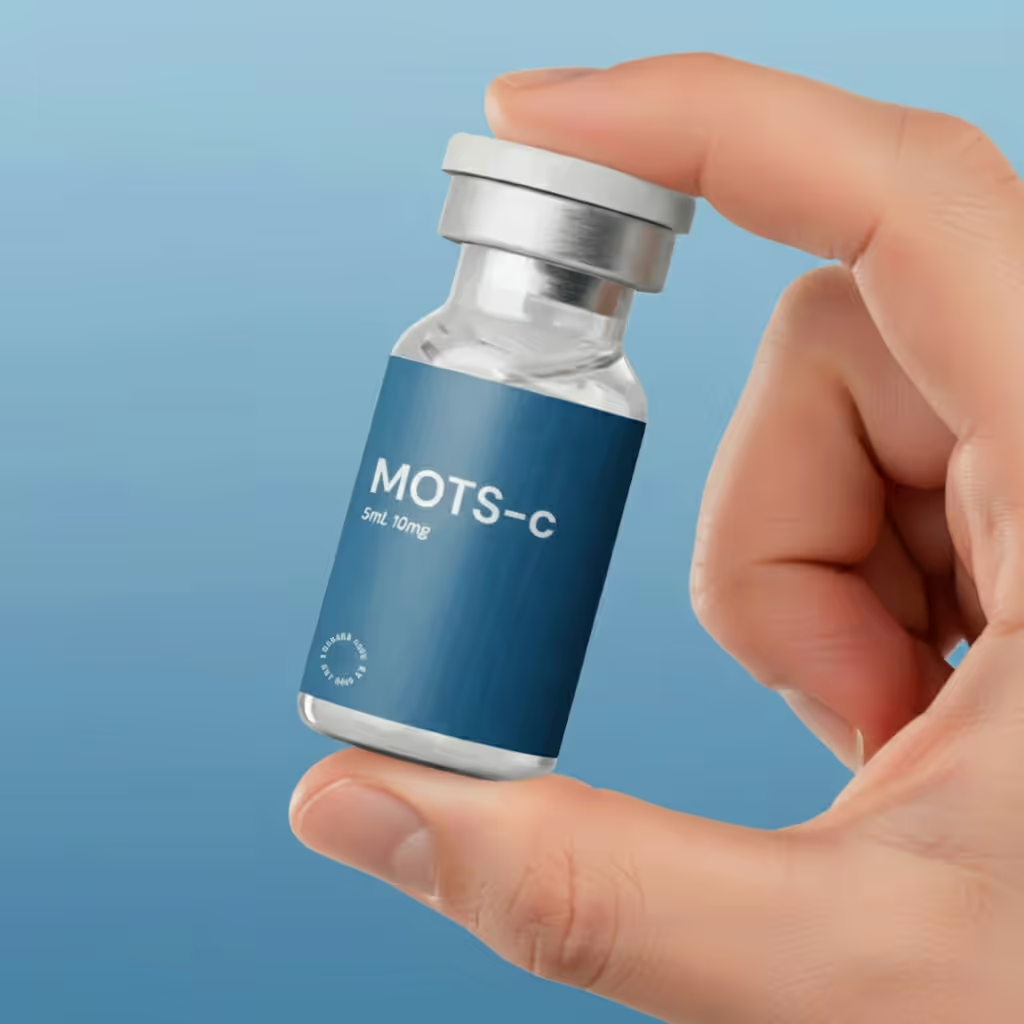
MOTS-c peptide therapy is an innovative approach to enhancing metabolic health, focusing on the unique properties of the MOTS-c peptide. This therapy aims to regulate metabolism, improve energy levels, and support healthy aging.
MOTS-C peptide is a mitochondrial-derived peptide that plays a crucial role in cellular energy metabolism and longevity. This powerful peptide helps regulate glucose metabolism, enhance insulin sensitivity, and promote healthy aging processes. Research shows MOTS-C may support weight management, improve exercise performance, and protect against age-related metabolic decline.
What is MOTS-c Peptide and How Does It Regulate Metabolism?
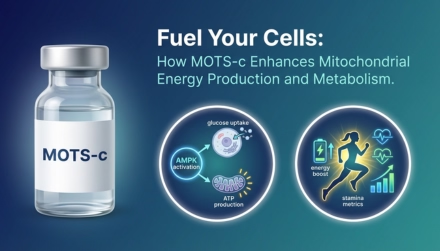
MOTS-c peptide is a mitochondrial-derived peptide that enhances metabolic function by activating AMP-activated protein kinase (AMPK), a key regulator of energy homeostasis. This activation leads to improved glucose uptake and increased fat oxidation, vital for maintaining metabolic health.
MOTS-c: Mechanisms & Effects on Metabolism, Stress, and Aging
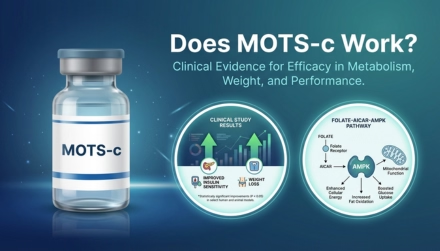
MOTS-c is a peptide encoded by the short open reading frame of the mitochondrial 12S rRNA gene. It is significantly expressed in response to stress or exercise and translocated to the nucleus, where it regulates the expression of stress adaptation-related genes with antioxidant response elements (ARE). MOTS-c mainly acts through the Folate-AICAR-AMPK pathway, thereby influencing energy metabolism, insulin resistance, inflammatory response, exercise, aging and aging-related pathologies.
-- Mitochondria-derived peptide MOTS-c: effects and mechanisms related to stress, metabolism and aging, 2015
Biological Role of MOTS-c in Mitochondrial Function
MOTS-c acts as a metabolic regulator within the mitochondria, influencing how cells respond to energy demands. By modulating mitochondrial function, MOTS-c helps maintain cellular energy levels, which is particularly important as individuals age. The connection between MOTS-c and mitochondrial health underscores its potential in combating age-related metabolic decline.
| Category | Detail | Process Relevance |
|---|---|---|
| Mechanism -- AMPK | Activates via Folate-AICAR-AMPK pathway | Foundation of metabolic enhancement |
| Mechanism -- Mitochondrial | Modulates mitochondrial function and dynamics | Maintains cellular energy levels |
| Mechanism -- Stress Response | Expressed in response to stress/exercise; nuclear translocation | Regulates ARE stress adaptation genes |
| Benefit -- Insulin Sensitivity | Enhances glucose utilization | High clinical evidence |
| Benefit -- Weight Management | Fat oxidation and metabolic flexibility | High clinical evidence |
| Benefit -- Exercise Performance | Increases energy for physical performance | Moderate/emerging evidence |
| Process -- Consultation | Comprehensive metabolic health assessment | Determines suitability and goals |
| Process -- Dosing | Personalized subcutaneous injection protocols | Tailored to individual needs |
| Process -- Monitoring | Continuous physician oversight | Optimizes outcomes and safety |
Mechanisms of MOTS-c Peptide Effects on Metabolic Enhancement
MOTS-c primarily activates AMPK, which promotes glucose uptake and fatty acid oxidation. This process improves energy availability, supports weight management, and enhances metabolic flexibility. MOTS-c's ability to influence mitochondrial dynamics contributes to its effectiveness in enhancing overall metabolic health.
How Does the Physician-Supervised MOTS-c Therapy Process Work?
The physician-supervised process involves several key steps. Initially, patients undergo a comprehensive consultation to assess their metabolic health and determine suitability. Following this, dosing protocols are established, typically involving subcutaneous injections of MOTS-c peptide. Throughout therapy, continuous monitoring and support are provided by healthcare professionals to optimize outcomes.
What are the clinically supported benefits of MOTS-c therapy?
Key benefits include improved insulin sensitivity (enhances glucose utilization -- high clinical evidence), weight management (supports fat oxidation and metabolic flexibility -- high clinical evidence), and exercise performance (increases energy levels for better physical performance -- moderate emerging evidence).
How does MOTS-c improve metabolic function and energy levels?
MOTS-c activates AMPK, which enhances glucose uptake and promotes fat oxidation, increasing energy availability. The synergy between MOTS-c therapy and regular exercise can further amplify these benefits, making it an effective strategy for boosting metabolic health.
What are the effects on weight management and healthy aging?
MOTS-c improves metabolic health, aids body composition changes by promoting fat loss while preserving lean muscle mass, and provides sustained energy levels essential for an active lifestyle and healthy aging.
What is the safety profile and side effect risk?
MOTS-c is generally well-tolerated with a favorable safety profile. Common side effects are minimal (mild injection site reactions). Long-term safety data supports use in healthy adults with physician oversight to minimize potential adverse effects.
What common questions do patients have about MOTS-c therapy?
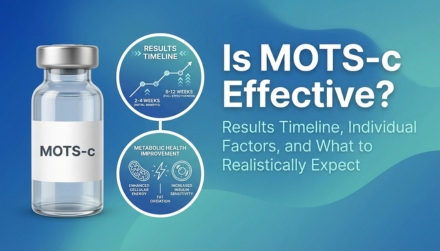
Patients frequently ask about: interactions with current medications (discuss with provider), who should not use MOTS-c (certain medical conditions may require avoidance), and expected results timeline (varies by individual but improvements often begin within weeks).
What Are the Clinically Supported Benefits?
- Improved Insulin Sensitivity: Enhances the body's ability to utilize glucose effectively.
- Weight Management: Supports fat oxidation and metabolic flexibility, aiding in weight loss efforts.
- Exercise Performance: Increases energy levels, potentially enhancing physical performance during workouts.
MOTS-c: Preventing Obesity & Insulin Resistance via AMPK Activation
MOTS-c treatment in mice prevented ovariectomy-induced obesity and insulin resistance. MOTS-c treatment increased brown fat activation and reduced OVX-induced fat accumulation and inflammatory invasion in white adipose tissue. Moreover, MOTS-c activated AMPK pathway to improve energy dissipation and insulin sensitivity. In conclusion, MOTS-c is a high potential candidate for chronic treatment of menopausal induced metabolic dysfunction.
-- MOTS-c peptide regulates adipose homeostasis to prevent ovariectomy-induced metabolic dysfunction, 2019
| Category | Detail | Guidance |
|---|---|---|
| Plan -- 6-Month | $146 first month, then $196/mo | Best value for sustained therapy |
| Plan -- 3-Month | $166 first month, then $216/mo | Mid-range commitment |
| Plan -- Monthly | $216 first month, then $266/mo | Flexible; no long-term commitment |
| Payment -- FSA/HSA | May be eligible for coverage | Review eligibility requirements |
| Safety -- Profile | Generally well-tolerated; favorable | Minimal side effects reported |
| Safety -- Side Effects | Mild injection site reactions | Physician oversight minimizes risks |
| FAQ -- Medications | Potential interactions with current medications | Discuss all medications with provider |
| FAQ -- Contraindications | Certain medical conditions may require avoidance | Provider assessment determines suitability |
| FAQ -- Results Timeline | Varies by individual | Improvements often begin within weeks |
Improvement in Metabolic Function and Energy Levels
MOTS-c significantly improves metabolic function and energy levels by activating AMPK. This activation enhances glucose uptake and promotes fat oxidation, leading to increased energy availability. The synergy between MOTS-c therapy and regular exercise can further amplify these benefits.
Effects on Weight Management and Healthy Aging
MOTS-c therapy aids body composition changes, promoting fat loss while preserving lean muscle mass. Sustained energy levels contribute to an active lifestyle essential for healthy aging. This dual benefit makes MOTS-c attractive for individuals seeking to maintain their vitality as they age.
Safety Profile
MOTS-c peptide therapy is generally well-tolerated with a favorable safety profile. Common side effects are minimal and may include mild injection site reactions. Long-term safety data supports use in healthy adults, and physician oversight ensures any potential adverse effects are addressed promptly.
Conclusion
The MOTS-c therapy process is straightforward: consultation, personalized dosing, and ongoing physician monitoring -- all built around a peptide that activates AMPK through the Folate-AICAR-AMPK pathway to drive glucose uptake, fat oxidation, and energy production. The clinical evidence supports this approach: high-evidence benefits for insulin sensitivity and weight management, moderate evidence for exercise performance, and confirmed obesity prevention in animal models. What makes the process effective is its structure -- physician supervision ensures dosing matches individual metabolic profiles, and regular monitoring catches any issues early. With flexible subscription plans and potential FSA/HSA eligibility, the barrier to entry is manageable for most individuals seeking metabolic optimization.
Disclaimer: This information is for educational purposes only and does not constitute medical advice. MOTS-c is a peptide therapy not currently FDA-approved. Always consult a licensed healthcare provider before starting, stopping, or changing any treatment. Individual results vary.