How MOTS-c Peptide Therapy Enhances Energy Metabolism and Supports Weight Management
A guide to how MOTS-c peptide therapy enhances energy metabolism and supports weight management. Covers MOTS-c's role in mitochondrial function and cellular energy regulation, how it improves mitochondrial energy production through AMPK activation, scientific foundations including the Folate-AICAR-AMPK pathway, mechanisms underlying energy metabolism impact (glucose uptake, fat oxidation, stress adaptation), how enhanced energy translates to improved physical performance and recovery, MOTS-c's support for weight management through fat metabolism and insulin sensitivity, clinical evidence including prevented obesity in animal models, physician-supervised personalized therapy importance, and FSA/HSA eligibility and access steps.
MOTS-c peptide therapy represents a groundbreaking approach to enhancing energy metabolism and supporting weight management. This innovative therapy utilizes the MOTS-c peptide, a mitochondrial-derived peptide that plays a crucial role in regulating metabolic processes.
What Is MOTS-c Peptide and Its Role in Mitochondrial Function?
MOTS-c is a mitochondrial-derived peptide that plays a vital role in cellular energy metabolism. It functions by regulating mitochondrial function and enhancing metabolic processes essential for maintaining energy homeostasis. By influencing metabolic pathways, MOTS-c helps improve energy production and utilization, supporting overall metabolic health.
MOTS-C peptide is a mitochondrial-derived peptide that plays a crucial role in cellular energy metabolism and longevity. This powerful peptide helps regulate glucose metabolism, enhance insulin sensitivity, and promote healthy aging processes. Research shows MOTS-C may support weight management, improve exercise performance, and protect against age-related metabolic decline.
How Does MOTS-c Improve Mitochondrial Energy Production?
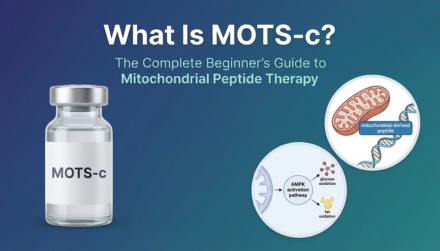
MOTS-c enhances mitochondrial energy production primarily by activating AMP-activated protein kinase (AMPK), a key regulator of cellular energy homeostasis. AMPK activation leads to increased glucose uptake and improved fat oxidation, which are critical for efficient energy production. By promoting these metabolic processes, MOTS-c helps ensure cells have the energy they need to function optimally.
| Category | Detail | Energy Impact |
|---|---|---|
| Mechanism -- AMPK Activation | Key regulator of cellular energy homeostasis | Increased glucose uptake and fat oxidation |
| Mechanism -- Mitochondrial | Enhances mitochondrial function and efficiency | More efficient energy production |
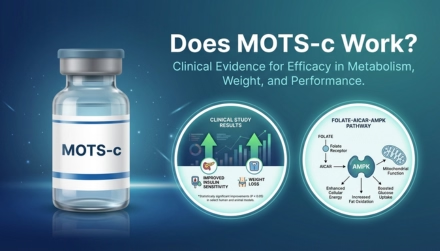
| Mechanism -- Folate-AICAR-AMPK | Core pathway for metabolic regulation | Influences energy, insulin, inflammation, aging |
| Mechanism -- Stress Adaptation | Regulates ARE genes in response to stress/exercise | Better cellular adaptation to energy demands |
| Performance -- Endurance | Improved stamina during physical activities | Train harder and longer with less fatigue |
| Performance -- Recovery | Faster post-exercise recovery times | More frequent training without exhaustion |
| Performance -- Energy Levels | Significant user-reported improvements | Greater ease in physical activities |
What Are the Scientific Foundations of MOTS-c Effects?
Studies demonstrate that MOTS-c can influence various metabolic pathways, leading to improved energy metabolism and weight management. Research indicates MOTS-c enhances mitochondrial function and positively impacts insulin sensitivity, supporting its role in metabolic health.
MOTS-c: Regulating Energy Metabolism & Stress Homeostasis
MOTS-c is a peptide encoded by the short open reading frame of the mitochondrial 12S rRNA gene. It is significantly expressed in response to stress or exercise and translocated to the nucleus, where it regulates the expression of stress adaptation-related genes with antioxidant response elements (ARE). MOTS-c mainly acts through the Folate-AICAR-AMPK pathway, thereby influencing energy metabolism, insulin resistance, inflammatory response, exercise, aging and aging-related pathologies.
-- Mitochondria-derived peptide MOTS-c: effects and mechanisms related to stress, metabolism and aging, 2015
How Does MOTS-c Boost Energy Levels?
MOTS-c boosts energy levels by enhancing metabolic processes crucial for energy production. By improving mitochondrial function, MOTS-c facilitates more efficient energy utilization, leading to increased stamina and reduced fatigue. Users often report significant improvements in energy levels, allowing greater ease in physical activities. Long-term benefits include not only enhanced energy but also improved overall metabolic health.
How does enhanced energy metabolism translate to improved physical performance?
Individuals with increased energy levels report better endurance during physical activities, allowing them to train harder and longer. Improved energy metabolism also leads to faster recovery times, enabling regular exercise without excessive fatigue. This combination makes MOTS-c attractive for athletes and fitness enthusiasts.
In what ways does MOTS-c support weight management?
MOTS-c helps the body utilize stored fat more effectively by enhancing energy metabolism and improving insulin sensitivity. Better insulin sensitivity allows the body to regulate blood sugar levels more effectively, reducing the risk of weight gain and metabolic disorders.
How does MOTS-c influence fat metabolism and body composition?
MOTS-c promotes fatty acid oxidation, helping the body utilize fat stores for energy. Users report changes in body composition including increased lean muscle mass and decreased fat mass, which is beneficial for both aesthetics and reduced chronic disease risk.
What clinical evidence supports MOTS-c's role in metabolic health?
Preclinical studies demonstrate enhanced mitochondrial function and improved metabolic parameters. Animal models show prevented obesity and improved insulin sensitivity via AMPK. Clinical trials show positive effects on insulin sensitivity and body composition. Ongoing research continues to expand the evidence base.
Why is physician supervision important for MOTS-c therapy?
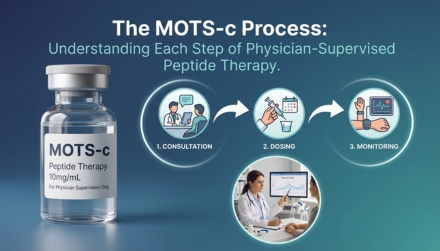
A healthcare professional evaluates medical history, assesses specific needs, and monitors treatment response. Benefits include personalized treatment plans, safety monitoring through regular check-ups, and progress evaluation with necessary adjustments to enhance results.
Is MOTS-c therapy eligible for FSA/HSA and how do patients begin?
MOTS-c may be eligible for FSA/HSA coverage depending on individual insurance plans. To begin, schedule a consultation with a qualified provider, undergo evaluation, and receive a personalized treatment plan with dosing schedule and expected outcomes. Regular follow-ups monitor effectiveness.
How Does MOTS-c Support Weight Management and Metabolic Health?
MOTS-c plays a significant role in supporting weight management. By enhancing energy metabolism, it helps the body utilize stored fat more effectively. MOTS-c improves insulin sensitivity, a critical factor in weight management, allowing the body to regulate blood sugar levels and reducing the risk of weight gain and metabolic disorders.
MOTS-c: Preventing Obesity & Enhancing Energy Metabolism
Mitochondrial-derived peptide (MOTS-c) is a 16-amino acid peptide encoded by mitochondrial DNA. Here, we showed that MOTS-c treatment in mice prevented ovariectomy-induced obesity and insulin resistance. MOTS-c treatment increased brown fat activation and reduced OVX-induced fat accumulation and inflammatory invasion in white adipose tissue. Moreover, MOTS-c activated AMPK pathway to improve energy dissipation and insulin sensitivity.
-- MOTS-c peptide regulates adipose homeostasis to prevent ovariectomy-induced metabolic dysfunction, 2019
| Category | Detail | Guidance |
|---|---|---|
| Weight -- Fat Oxidation | Promotes fatty acid oxidation for energy | Reduces body fat percentage over time |
| Weight -- Insulin Sensitivity | Improves blood sugar regulation | Reduces weight gain and metabolic disorder risk |
| Weight -- Body Composition | Increased lean muscle; decreased fat mass | User-reported composition changes |
| Evidence -- Animal Models | Prevented obesity; brown fat activation; AMPK improvement | High-potential metabolic dysfunction candidate |
| Evidence -- Clinical Trials | Positive effects on insulin sensitivity and composition | Ongoing research expanding evidence base |
| Access -- Physician Supervision | Personalized dosing and safety monitoring | Tailored to individual health profile |
| Access -- Getting Started | Consultation, evaluation, personalized plan | Regular follow-ups for adjustments |
| Access -- FSA/HSA | May be eligible for coverage | Verify with insurance provider |
How Does MOTS-c Influence Fat Metabolism and Body Composition?
MOTS-c promotes fatty acid oxidation, essential for effective weight management. This process helps the body utilize fat stores for energy, leading to a reduction in body fat percentage over time. Users often report changes in body composition, including increased lean muscle mass and decreased fat mass.
Physician-Supervised Personalized Therapy
Physician supervision is crucial for safe and effective MOTS-c administration. Healthcare professionals evaluate medical history, assess specific needs, and monitor treatment response. Personalized therapy plans are developed through comprehensive consultation, with customized dosing protocols based on age, weight, and overall health status.
How Can Patients Begin MOTS-c Therapy?
Patients should schedule a consultation with a qualified healthcare provider. During this appointment, they will discuss health goals and undergo thorough evaluation. A personalized treatment plan will outline the dosing schedule and expected outcomes. Regular follow-ups assess effectiveness and allow necessary adjustments. FSA/HSA may be eligible for coverage depending on individual insurance plans.
Conclusion
MOTS-c peptide therapy delivers energy and weight management benefits through a single, well-characterized mechanism: Folate-AICAR-AMPK pathway activation at the mitochondrial level. This drives glucose uptake, fat oxidation, and efficient energy production simultaneously -- meaning the same pathway that boosts your energy is the one burning stored fat. The clinical evidence connects these mechanisms to real outcomes: prevented obesity in animal models, improved insulin sensitivity, and user-reported improvements in energy, endurance, body composition, and recovery. Under physician supervision with personalized dosing, MOTS-c offers a unified metabolic approach where energy enhancement and weight management are not competing goals but complementary outcomes of the same cellular process.
Disclaimer: This information is for educational purposes only and does not constitute medical advice. MOTS-c is a peptide therapy not currently FDA-approved. Always consult a licensed healthcare provider before starting, stopping, or changing any treatment. Individual results vary.