What Makes MOTS-c Therapy a Game Changer?
A guide to what makes MOTS-c therapy a game changer in metabolic health. Covers how MOTS-c optimizes metabolic health through AMPK activation, the role of mitochondrial peptides in cellular energy regulation, clinical benefits for weight management and aging, how MOTS-c supports healthy aging through metabolic optimization, exercise performance enhancement and energy benefits, physician supervision importance for safety and efficacy, subscription model features and FSA/HSA eligibility, comparison to other metabolic peptide treatments, scientific evidence supporting MOTS-c through the Folate-AICAR-AMPK pathway, and gaps in current peptide therapies that MOTS-c addresses.
MOTS-c therapy represents a significant advancement in metabolic health treatments, leveraging the unique properties of the mitochondrial-derived peptide MOTS-c. This innovative therapy is designed to optimize metabolism, enhance energy levels, and support healthy aging.
How Does MOTS-c Optimize Metabolic Health?
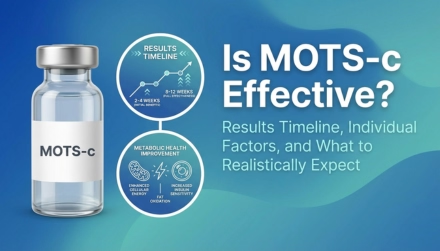
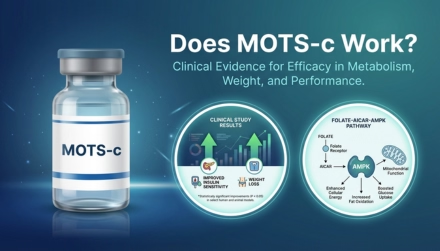
MOTS-c optimizes metabolic health by activating AMP-activated protein kinase (AMPK), a crucial regulator of cellular energy homeostasis. This activation enhances glucose uptake and promotes fat oxidation, leading to improved metabolic efficiency. By stimulating AMPK, MOTS-c helps the body utilize energy more effectively, which is essential for maintaining a healthy weight and preventing metabolic disorders.
MOTS-c is a 16-amino acid peptide encoded by a mitochondrial gene, playing a role in regulating metabolism and promoting physical performance. It's considered an "exercise-mimetic" because it can improve glucose uptake in skeletal muscle and enhance insulin sensitivity without requiring insulin. While research suggests potential benefits for metabolic health and physical performance, it's not yet widely used clinically and some studies indicate potential side effects.
What Role Do Mitochondrial Peptides Play in Cellular Energy Regulation?
Mitochondrial peptides, including MOTS-c, play a vital role in cellular energy regulation by responding to metabolic stress. These peptides are naturally produced by the body and help maintain cellular energy balance, which is critical for overall health. By enhancing mitochondrial function, MOTS-c contributes to increased energy production and improved cellular resilience.
MOTS-C peptide is a mitochondrial-derived peptide that plays a crucial role in cellular energy metabolism and longevity. This powerful peptide helps regulate glucose metabolism, enhance insulin sensitivity, and promote healthy aging processes. Research shows MOTS-C may support weight management, improve exercise performance, and protect against age-related metabolic decline.
| Category | Detail | Game-Changer Impact |
|---|---|---|
| Mechanism -- AMPK Activation | Enhances glucose uptake and fat oxidation | Improved metabolic efficiency at cellular level |
| Mechanism -- Exercise Mimetic | Improves skeletal muscle glucose uptake without insulin | Metabolic benefits that complement physical activity |
| Mechanism -- Folate-AICAR-AMPK | Core pathway for energy metabolism regulation | Influences insulin resistance, inflammation, and aging |
| Benefit -- Weight Management | Promotes fat oxidation and metabolic efficiency | Sustainable weight control approach |
| Benefit -- Insulin Sensitivity | Optimizes glucose metabolism | Reduced type 2 diabetes risk |
| Benefit -- Healthy Aging | Counteracts age-related mitochondrial decline | Maintains energy and metabolic function with age |
| Advantage -- Mitochondrial Specificity | Targets mitochondrial function directly | Fills gap left by broader peptide therapies |
What Are the Clinical Benefits for Weight Management and Aging?
- Metabolic Support: Enhances metabolic efficiency, aiding in weight loss and management.
- Weight Management: Promotes fat oxidation for achieving and maintaining a healthy weight.
- Improved Insulin Sensitivity: Optimizes glucose metabolism, reducing the risk of type 2 diabetes.
How Does MOTS-c Support Healthy Aging?
MOTS-c supports healthy aging by counteracting age-related metabolic decline. As individuals age, mitochondrial function often diminishes, leading to decreased energy levels and increased susceptibility to metabolic disorders. MOTS-c helps mitigate these effects by enhancing mitochondrial function and promoting metabolic optimization.
How Does MOTS-c Enhance Exercise Performance and Energy?
MOTS-c enhances exercise performance by increasing endurance and improving recovery times. The peptide's ability to optimize energy utilization allows individuals to perform at higher intensities for longer durations. Additionally, MOTS-c aids in muscle recovery post-exercise, reducing fatigue and soreness.
Why is physician supervision essential for MOTS-c therapy?
Physicians evaluate individual health conditions, tailor dosing protocols, and monitor progress throughout treatment. This oversight mitigates potential risks and ensures patients receive appropriate care. Physicians screen for contraindications and adjust dosages as needed.
How does MOTS-c compare to other metabolic peptide treatments?
MOTS-c distinguishes itself through its unique focus on mitochondrial health. Unlike traditional peptides targeting broader metabolic pathways, MOTS-c specifically enhances mitochondrial function, leading to more efficient energy utilization and metabolic optimization.
What scientific evidence supports MOTS-c?
MOTS-c acts through the Folate-AICAR-AMPK pathway, influencing energy metabolism, insulin resistance, inflammatory response, and aging pathologies. Preclinical studies demonstrate significant effects on metabolic regulation and energy production. It is encoded by the mitochondrial 12S rRNA gene and expressed in response to stress or exercise.
What gaps in current therapies does MOTS-c address?
Many existing peptide therapies lack specificity in targeting mitochondrial function, which is crucial for effective metabolic regulation. MOTS-c's unique mechanism fills this gap, offering a more targeted solution for improving metabolic health at the cellular level.
Is MOTS-c safe for long-term use?
MOTS-c is considered safe for long-term use under physician supervision. While extensive long-term data is still developing, existing studies suggest no significant adverse effects in healthy individuals. Ongoing monitoring and assessment are essential throughout treatment.
Why Is Physician Supervision Essential?
Physician supervision is crucial to ensure safety and effectiveness. Medical professionals evaluate health conditions, tailor dosing protocols, screen for contraindications, and monitor progress. This oversight maximizes therapeutic benefits while minimizing risks.
How Does MOTS-c Compare to Other Metabolic Peptide Treatments?
MOTS-c distinguishes itself through its unique mechanism and focus on mitochondrial health. Unlike traditional peptides targeting broader metabolic pathways, MOTS-c specifically enhances mitochondrial function, leading to more efficient energy utilization.
MOTS-c: Mechanisms for Metabolism, Stress & Healthy Aging
MOTS-c is a peptide encoded by the short open reading frame of the mitochondrial 12S rRNA gene. It is significantly expressed in response to stress or exercise and translocated to the nucleus, where it regulates the expression of stress adaptation-related genes with antioxidant response elements (ARE). MOTS-c mainly acts through the Folate-AICAR-AMPK pathway, thereby influencing energy metabolism, insulin resistance, inflammatory response, exercise, aging and aging-related pathologies.
-- Mitochondria-derived peptide MOTS-c: effects and mechanisms related to stress, metabolism and aging, 2015
| Category | Detail | Guidance |
|---|---|---|
| vs Other Peptides | Specifically targets mitochondrial function | More efficient energy utilization than broad-pathway peptides |
| Gap Addressed | Mitochondrial specificity missing from most therapies | Targeted solution for metabolic optimization |
| Safety -- Long-Term | Considered safe under physician supervision | Ongoing monitoring essential; long-term data developing |
| Safety -- Side Effects | Generally mild (injection site, fatigue, digestive) | Individual responses vary; report to provider |
| Supervision | Personalized dosing and contraindication screening | Maximizes benefits while minimizing risks |
| Subscription | Personalized plans with regular consultations | Ongoing adjustments based on progress |
| FSA/HSA | Designed for eligibility | Requires medical supervision and prescription |
What Gaps Does MOTS-c Address?
MOTS-c addresses several gaps in current peptide therapies by providing a targeted approach to metabolic optimization. Many existing therapies lack specificity in targeting mitochondrial function. MOTS-c's unique mechanism fills this gap, offering a more effective solution for metabolic health.
Subscription Model and FSA/HSA Eligibility
Subscription plans include personalized treatment, regular consultations, and ongoing adjustments. FSA/HSA eligibility requires medical supervision by a licensed provider and a prescription for access.
Conclusion
What makes MOTS-c a game changer is specificity. While most metabolic therapies target broad pathways or downstream symptoms, MOTS-c goes directly to the mitochondrial source -- activating AMPK through the Folate-AICAR pathway to drive glucose uptake, fat oxidation, and cellular energy production. Its exercise-mimetic properties mean it delivers metabolic benefits that complement physical activity rather than replacing it. The clinical evidence positions MOTS-c as a targeted intervention that fills a genuine gap in current peptide therapies: direct mitochondrial function enhancement. Under physician supervision with personalized protocols and accessible subscription models, MOTS-c represents the kind of precision metabolic therapy the field has been moving toward.
Disclaimer: This information is for educational purposes only and does not constitute medical advice. MOTS-c is a peptide therapy not currently FDA-approved. Always consult a licensed healthcare provider before starting, stopping, or changing any treatment. Individual results vary.