Why Choose MOTS-c Peptide Therapy for Enhanced Wellness
A guide to why MOTS-c peptide therapy enhances wellness. Covers MOTS-c's benefits overview (metabolic optimization, personalized care, weight management), how it enhances metabolic function through AMPK activation, the biological role in cellular metabolism through the Folate-AICAR-AMPK pathway, how MOTS-c improves mitochondrial function (ATP production, ROS reduction), physician-supervised therapy benefits (safety, personalized treatment, monitoring), weight management and metabolic health support, exercise performance enhancement and patient recovery experiences, healthy aging and anti-aging benefits, and FSA/HSA eligibility information.
MOTS-c peptide therapy represents a groundbreaking approach to enhancing wellness through metabolic and cellular health improvements. This innovative therapy leverages the unique properties of the MOTS-c peptide, which plays a crucial role in regulating metabolic functions and promoting overall well-being.
MOTS-C peptide is a mitochondrial-derived peptide that plays a crucial role in cellular energy metabolism and longevity. This powerful peptide helps regulate glucose metabolism, enhance insulin sensitivity, and promote healthy aging processes. Research shows MOTS-C may support weight management, improve exercise performance, and protect against age-related metabolic decline.
Benefits Overview
MOTS-c peptide therapy offers a range of benefits:
- Metabolic Optimization: Regulates metabolic pathways, leading to improved energy utilization and fat oxidation.
- Personalized Care: Physician supervision ensures treatment plans are tailored to individual needs.
- Support for Weight Management: Enhances metabolic function to aid in weight control and body composition.
What Is MOTS-c and How Does It Enhance Metabolic Function?
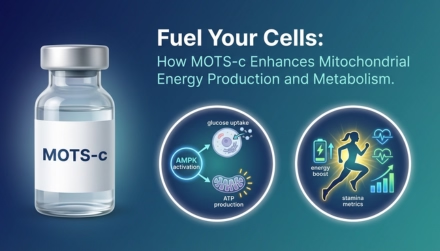
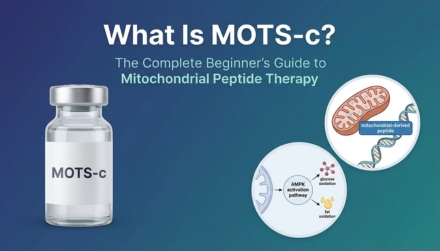
MOTS-c peptide therapy involves the administration of a peptide derived from mitochondrial DNA. It enhances metabolic function by activating AMP-activated protein kinase (AMPK), a crucial regulator of cellular energy homeostasis. By activating AMPK, MOTS-c promotes glucose uptake and fat oxidation, leading to improved metabolic health and more efficient energy metabolism.
| Category | Detail | Wellness Impact |
|---|---|---|
| Metabolic Optimization | AMPK activation drives glucose uptake and fat oxidation | Improved energy utilization and metabolic efficiency |
| Mitochondrial Function | Increases ATP production; reduces ROS accumulation | Higher energy levels; reduced cellular damage |
| Insulin Sensitivity | Improves glucose metabolism via AMPK | Better blood sugar control; reduced diabetes risk |
| Weight Management | Promotes fat oxidation; reduces fat storage | Healthier body composition |
| Stress Adaptation | Regulates ARE genes in response to stress/exercise | Enhanced cellular resilience |
| Personalized Care | Physician-supervised tailored treatment | Optimized dosing and outcomes |
Understanding the Biological Role of MOTS-c in Cellular Metabolism
MOTS-c's primary function is to activate AMPK, which enhances glucose uptake in muscle cells and promotes fat oxidation in adipose tissue. This activation leads to improved insulin sensitivity, essential for maintaining healthy blood sugar levels. MOTS-c also influences mitochondrial function, supporting energy production and reducing oxidative stress.
MOTS-c: Regulating Metabolism, Insulin, and Healthy Aging
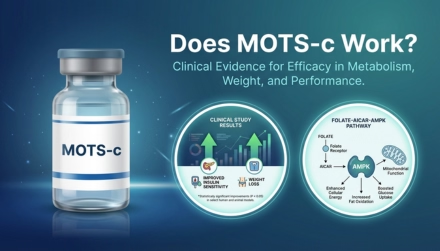
MOTS-c is a peptide encoded by the short open reading frame of the mitochondrial 12S rRNA gene. It is significantly expressed in response to stress or exercise and translocated to the nucleus, where it regulates the expression of stress adaptation-related genes with antioxidant response elements (ARE). MOTS-c mainly acts through the Folate-AICAR-AMPK pathway, thereby influencing energy metabolism, insulin resistance, inflammatory response, exercise, aging and aging-related pathologies.
-- Mitochondria-derived peptide MOTS-c: effects and mechanisms related to stress, metabolism and aging, 2015
How MOTS-c Improves Mitochondrial Function for Wellness
MOTS-c enhances mitochondrial function, which is vital for overall wellness. Mitochondria produce energy in the form of ATP. By improving their function, MOTS-c increases energy production and reduces the accumulation of reactive oxygen species (ROS), which can lead to cellular damage. This enhancement supports physical energy levels and contributes to improved mental clarity and cognitive function.
What are the key benefits of physician-supervised MOTS-c therapy?
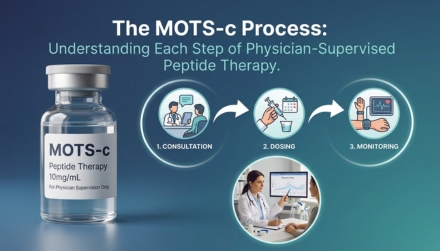
Safety and efficacy through medical oversight, personalized treatment tailored to individual health profiles, and regular monitoring with timely adjustments to the treatment plan. Physicians evaluate medical history and contraindications before starting, then establish tailored dosing protocols.
How does MOTS-c support weight management and metabolic health?
MOTS-c activates AMPK to promote fat oxidation and improve insulin sensitivity, which are critical factors in weight control. The therapy facilitates utilization of stored fat for energy and contributes to overall metabolic health beyond just weight management.
How does MOTS-c enhance energy and exercise performance?
By improving mitochondrial function and metabolic efficiency, MOTS-c increases energy substrate availability and promotes fat oxidation. This allows higher-intensity performance for longer durations, with improved endurance and faster recovery times post-exercise.
How does MOTS-c contribute to healthy aging?
MOTS-c promotes healthy aging by enhancing mitochondrial efficiency and reducing oxidative stress. As mitochondrial function naturally declines with age, MOTS-c helps counteract decreased energy levels and increased susceptibility to age-related metabolic disorders.
How are personalized treatment plans developed?
Physicians consider individual factors such as age, weight, metabolic health, and specific wellness goals to determine the most effective dosing regimen. Regular follow-ups allow adjustments based on patient responses, ensuring the treatment remains effective.
Is MOTS-c therapy eligible for FSA/HSA payment?
MOTS-c peptide therapy may be eligible for payment through FSA or HSA depending on specific plan coverage policies. Patients should consult with their healthcare provider and financial advisor to understand eligibility criteria and maximize benefits.
What Are the Key Benefits of Physician-Supervised Peptide Therapy?
- Safety and Efficacy: Medical oversight ensures therapy is administered safely, minimizing risks.
- Personalized Treatment: Physicians tailor plans based on individual health profiles, optimizing dosing and outcomes.
- Monitoring and Adjustments: Regular monitoring allows for timely adjustments, ensuring best possible results.
How Does MOTS-c Support Weight Management?
MOTS-c supports weight management by activating AMPK to promote fat oxidation and improve insulin sensitivity. This facilitates utilization of stored fat for energy, contributing to healthier body composition.
MOTS-c for Obesity, Insulin Resistance, and Metabolic Dysfunction
MOTS-c treatment in mice prevented ovariectomy-induced obesity and insulin resistance. MOTS-c treatment increased brown fat activation and reduced OVX-induced fat accumulation and inflammatory invasion in white adipose tissue. Moreover, MOTS-c activated AMPK pathway to improve energy dissipation and insulin sensitivity. In conclusion, MOTS-c is a high potential candidate for chronic treatment of menopausal induced metabolic dysfunction.
-- MOTS-c peptide regulates adipose homeostasis to prevent ovariectomy-induced metabolic dysfunction, 2019
| Category | Detail | Guidance |
|---|---|---|
| Exercise -- Endurance | Improved performance at higher intensities | AMPK activation increases energy substrate availability |
| Exercise -- Recovery | Faster post-workout recovery | Enables more frequent and effective training |
| Aging -- Mitochondrial | Counteracts age-related mitochondrial decline | Supports energy and vitality with age |
| Aging -- Oxidative Stress | Reduces ROS accumulation | Protects against cellular damage |
| Safety -- Side Effects | Mild injection site reactions; transient energy changes | Generally well-tolerated under supervision |
| Safety -- Oversight | Physician evaluation and monitoring | Contraindication screening; dose adjustments |
| Access -- Personalization | Age, weight, metabolic health, and goals considered | Individualized dosing regimen |
| Access -- Payment | FSA/HSA may be eligible | Verify with provider and plan |
How Does MOTS-c Enhance Energy and Exercise Performance?
MOTS-c enhances energy and exercise performance by improving mitochondrial function and metabolic efficiency. By increasing energy substrate availability and promoting fat oxidation, MOTS-c allows individuals to perform at higher intensities for longer durations. Patients who have undergone therapy often report enhanced endurance during workouts and reduced recovery times, enabling more frequent and effective training.
How Can MOTS-c Contribute to Healthy Aging?
MOTS-c contributes to healthy aging by promoting mitochondrial health and metabolic function. As individuals age, mitochondrial function tends to decline, leading to decreased energy levels and increased susceptibility to age-related diseases. MOTS-c helps counteract these effects by enhancing mitochondrial efficiency and reducing oxidative stress. This support can lead to improved vitality and a greater quality of life throughout the aging process.
Conclusion
MOTS-c peptide therapy earns its place in the wellness conversation through biological specificity: it targets the Folate-AICAR-AMPK pathway to optimize metabolic function at the mitochondrial level. This means improved glucose uptake, fat oxidation, energy production, and reduced oxidative stress -- all from a single peptide mechanism. The clinical evidence supports its use for weight management, exercise performance, and healthy aging, with animal models confirming prevented obesity and improved insulin sensitivity. What distinguishes MOTS-c from general wellness supplements is that it works at the cellular engine itself, and under physician supervision, dosing is personalized to individual metabolic profiles. For individuals seeking a research-backed, mechanistically targeted approach to metabolic wellness, MOTS-c presents a compelling case.
Disclaimer: This information is for educational purposes only and does not constitute medical advice. MOTS-c is a peptide therapy not currently FDA-approved. Always consult a licensed healthcare provider before starting, stopping, or changing any treatment. Individual results vary.