MOTS-c Peptide for Effective Weight Loss
A guide to MOTS-c peptide for effective weight loss. Covers how MOTS-c supports weight loss through AMPK activation and fat oxidation, its role as a mitochondrial-derived peptide in metabolism, how it enhances fat burning and energy levels with exercise-mimetic effects, clinical evidence including obesity prevention in mouse models, recent studies demonstrating efficacy in weight management, safety profile and common side effects under physician supervision, personalized treatment plans with customized dosage and therapy duration, comparison with other fat-burning peptides, and FSA/HSA eligibility for therapy reimbursement.
MOTS-c peptide therapy is emerging as a promising solution for individuals seeking effective weight loss and metabolic enhancement. This innovative approach leverages the unique properties of mitochondrial-derived peptides to support metabolic health, making it a valuable option for those struggling with weight management.
Benefits of MOTS-c Peptide Therapy
MOTS-c peptide therapy offers several key benefits that contribute to effective weight loss and improved metabolic health:
- Metabolic Regulation: MOTS-c helps regulate glucose metabolism and energy expenditure.
- AMPK Activation: Activating AMPK promotes fat oxidation and energy utilization.
- Weight Management: Supports sustainable weight loss by enhancing metabolic function.
What is MOTS-c Peptide and How Does It Support Weight Loss?
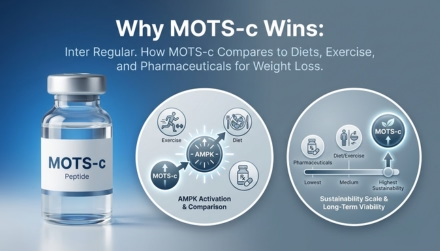
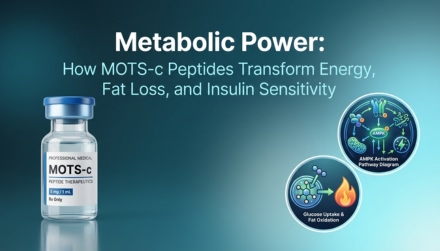
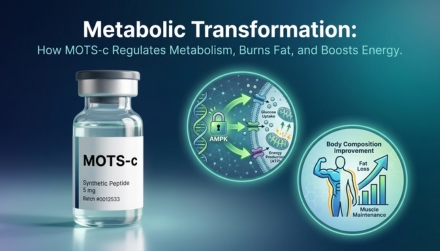
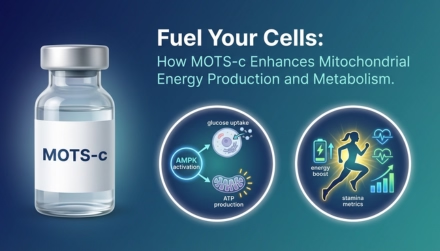
MOTS-c peptide is a mitochondrial-derived peptide that plays a crucial role in regulating metabolism and energy homeostasis. It supports weight loss by enhancing the body's ability to burn fat and utilize energy more efficiently. The peptide works by activating AMPK, a key regulator of cellular energy balance, which in turn promotes fat oxidation and reduces fat storage.
MOTS-C peptide is a mitochondrial-derived peptide that plays a crucial role in cellular energy metabolism and longevity. This powerful peptide helps regulate glucose metabolism, enhance insulin sensitivity, and promote healthy aging processes. Research shows MOTS-C may support weight management, improve exercise performance, and protect against age-related metabolic decline.
| Category | Detail | Weight Loss Impact |
|---|---|---|
| Benefit -- Metabolic Regulation | Regulates glucose metabolism and energy expenditure | Foundation for sustainable weight loss |
| Benefit -- AMPK Activation | Promotes fat oxidation and energy utilization | Directly drives fat burning |
| Benefit -- Exercise Mimetic | Mimics exercise effects on energy expenditure | Enhances fat loss beyond physical activity alone |
| Mechanism -- Skeletal Muscle | Targets skeletal muscle; enhances glucose metabolism | Implications for obesity, diabetes, and longevity |
| Mechanism -- Mitochondrial | Improves mitochondrial efficiency and energy production | More effective energy utilization and fat burning |
| Evidence -- OVX Mouse Model | Prevented obesity; increased brown fat activation | AMPK activation improved energy dissipation |
| Evidence -- Recent Studies | Reduced body fat percentage; improved metabolic markers | Reinforces role as weight loss intervention |
Understanding MOTS-c as a Mitochondrial-Derived Peptide
MOTS-c is synthesized in the mitochondria and is involved in various metabolic processes. Its primary role is to enhance mitochondrial function, which is essential for energy production and metabolic regulation. By improving mitochondrial efficiency, MOTS-c helps the body utilize energy more effectively, leading to increased fat burning and improved exercise performance.
MOTS-c: Regulating Obesity and Glucose Metabolism
MOTS-c has been shown to target the skeletal muscle and enhance glucose metabolism. As such, MOTS-c has implications in the regulation of obesity, diabetes, exercise, and longevity.
-- MOTS-c: a novel mitochondrial-derived peptide regulating muscle and fat metabolism, C Lee, 2016
How MOTS-c Enhances Fat Burning and Energy Levels
MOTS-c enhances fat burning by promoting the oxidation of fatty acids and improving energy levels. This peptide mimics the effects of exercise, stimulating pathways that lead to increased energy expenditure and fat loss. By activating AMPK, MOTS-c encourages the body to utilize stored fat as a source of energy, thereby facilitating weight loss. The increased energy levels can also enhance exercise performance, making it easier for individuals to engage in physical activity and further support weight loss goals.
What clinical evidence supports MOTS-c for metabolic health?
Clinical studies show MOTS-c enhances insulin sensitivity, aids obesity management, and improves exercise performance. In mouse models, MOTS-c prevented ovariectomy-induced obesity, increased brown fat activation, and improved insulin sensitivity via AMPK pathway activation.
What is the safety profile of MOTS-c peptide therapy?
MOTS-c is generally considered safe under physician supervision with minimal side effects. Commonly observed effects may include mild gastrointestinal discomfort or transient changes in energy levels. These are typically short-lived and resolve quickly.
How are personalized MOTS-c treatment plans developed?
Physicians evaluate medical history, current health status, and specific weight loss goals to create tailored protocols. Dosage and therapy duration are customized for optimal metabolic outcomes, with regular follow-ups for ongoing assessment and adjustments.
How does MOTS-c compare to other fat-burning peptides?
While some peptides primarily focus on appetite suppression, MOTS-c enhances energy expenditure and fat oxidation through AMPK activation, making it a more comprehensive metabolic solution. Its mitochondrial origin provides distinct advantages in energy metabolism.
Is MOTS-c therapy eligible for FSA/HSA reimbursement?
Patients may be eligible for reimbursement through FSA or HSA depending on their specific health plans. Verify eligibility requirements with your provider and ensure the therapy aligns with covered services.
How can I access physician-supervised MOTS-c therapy?
Access involves consultation with a qualified healthcare provider specializing in peptide therapies. During the consultation, you will undergo evaluation to determine suitability and develop a personalized plan tailored to your needs and weight loss goals.
What Clinical Evidence Supports MOTS-c Peptide Therapy for Metabolic Health?
Clinical studies have shown that MOTS-c peptide therapy can improve metabolic health markers. Research indicates that this therapy enhances insulin sensitivity, aids in obesity management, and improves exercise performance.
MOTS-c Prevents Obesity & Improves Insulin Sensitivity
Mitochondrial-derived peptide (MOTS-c) is a 16-amino acid peptide encoded by mitochondrial DNA. Here, we showed that MOTS-c treatment in mice prevented ovariectomy-induced obesity and insulin resistance. MOTS-c treatment increased brown fat activation and reduced OVX-induced fat accumulation and inflammatory invasion in white adipose tissue. Moreover, MOTS-c activated AMPK pathway to improve energy dissipation and insulin sensitivity. In conclusion, MOTS-c is a high potential candidate for chronic treatment of menopausal induced metabolic dysfunction.
-- MOTS-c peptide regulates adipose homeostasis to prevent ovariectomy-induced metabolic dysfunction, 2019
Recent Studies Demonstrating MOTS-c Efficacy in Weight Management
Recent studies have provided evidence for the efficacy of MOTS-c in weight management. Results indicate individuals undergoing MOTS-c therapy experienced reductions in body fat percentage and improvements in metabolic markers, reinforcing the peptide's role as a valuable intervention for weight loss.
| Category | Detail | Guidance |
|---|---|---|
| Safety -- Profile | Generally safe under physician supervision | Minimal side effects; proper monitoring essential |
| Safety -- Side Effects | Mild GI discomfort; transient energy changes | Typically short-lived and self-resolving |
| Personalization -- Assessment | Medical history, health status, weight loss goals | Thorough evaluation before starting |
| Personalization -- Dosage | Customized based on individual response | Adjusted with regular follow-ups |
| Personalization -- Duration | Several weeks to months | Tailored to specific needs and goals |
| vs Other Peptides -- Mechanism | AMPK activation and fat oxidation (not appetite suppression) | More comprehensive metabolic solution |
| vs Other Peptides -- Origin | Mitochondrial-derived (unique) | Distinct advantages in energy metabolism |
| Payment -- FSA/HSA | May be eligible for reimbursement | Verify with provider and health plan |
Safety Profile and Side Effects
MOTS-c peptide therapy is generally considered safe when administered under physician supervision. Commonly observed side effects may include mild gastrointestinal discomfort or transient changes in energy levels. These effects are typically short-lived. Consult with a healthcare provider to ensure proper monitoring during treatment.
Personalized Treatment Plans
Personalized MOTS-c treatment plans are developed based on individual health assessments and metabolic needs. Physicians evaluate medical history, current health status, and specific weight loss goals to create tailored protocols. Customizing dosage and duration is essential for optimal metabolic outcomes, with typical therapy ranging from several weeks to months.
Comparing MOTS-c with Other Fat-Burning Peptides
MOTS-c's mechanisms differ from traditional fat-burning peptides. While some peptides primarily focus on appetite suppression, MOTS-c enhances energy expenditure and fat oxidation, making it a more comprehensive solution for weight loss. Its mitochondrial origin provides distinct advantages in metabolic enhancement.
Conclusion
MOTS-c peptide therapy targets weight loss at the metabolic root: AMPK activation drives fat oxidation, glucose uptake, and energy expenditure. Unlike appetite-suppressing peptides, MOTS-c enhances the body's ability to burn stored fat and produce energy, functioning as an exercise-mimetic that works alongside physical activity. The evidence base is building from animal models preventing obesity to clinical observations of reduced body fat and improved metabolic markers. Under physician supervision with personalized dosing, MOTS-c offers a mechanistically sound approach to weight management that addresses metabolism rather than willpower.
Disclaimer: This information is for educational purposes only and does not constitute medical advice. MOTS-c is a peptide therapy not currently FDA-approved. Always consult a licensed healthcare provider before starting, stopping, or changing any treatment. Individual results vary.