MOTS-c Peptide Therapy Benefits for Optimal Health
A guide to MOTS-c peptide therapy benefits for optimal health. Covers metabolic regulation through AMPK activation, weight management via fat oxidation, biological role of MOTS-c in mitochondrial function (production, energy metabolism, cellular health), how MOTS-c enhances metabolic processes and energy production, exercise performance improvement and recovery, weight regulation mechanisms, healthy aging and longevity benefits, mitochondrial peptide influence on cellular aging (senescence, inflammation, cognitive decline), clinical evidence supporting aging support, physician supervision importance, and subscription/FSA/HSA access options.
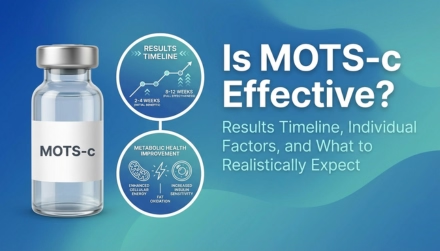
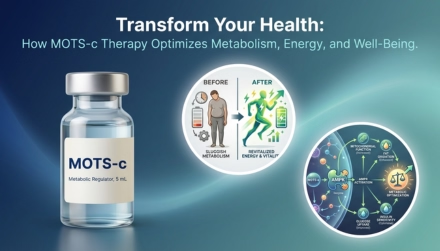
MOTS-c peptide therapy is emerging as a revolutionary approach to enhancing metabolic health and overall well-being. This innovative therapy harnesses the power of MOTS-c peptides, which play a crucial role in regulating energy levels, exercise performance, and healthy aging.
MOTS-C peptide is a mitochondrial-derived peptide that plays a crucial role in cellular energy metabolism and longevity. This powerful peptide helps regulate glucose metabolism, enhance insulin sensitivity, and promote healthy aging processes. Research shows MOTS-C may support weight management, improve exercise performance, and protect against age-related metabolic decline.
The Benefits of MOTS-c Peptide Therapy for Optimal Health
- Metabolic Regulation: Regulates metabolic processes, improving insulin sensitivity and reducing metabolic syndrome risk.
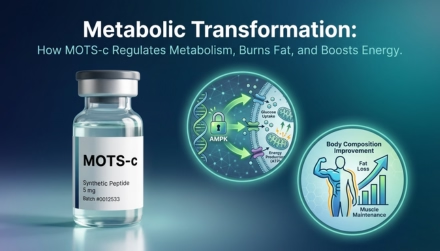
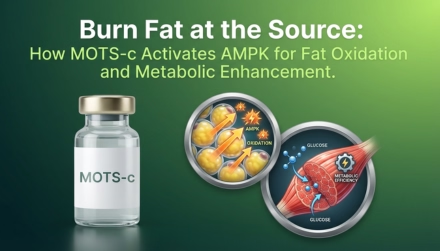
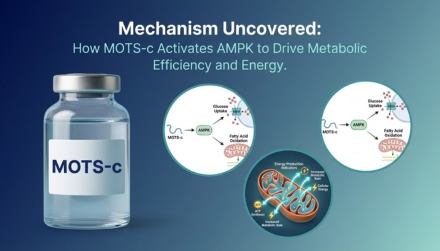
- AMPK Activation: Activates AMP-activated protein kinase, enhancing cellular energy production and fat oxidation.
- Weight Management: Aids in weight loss by improving metabolic efficiency and reducing fat accumulation.
Biological Role of MOTS-c Peptides in Mitochondrial Function
MOTS-c peptides are integral to mitochondrial function. They are produced in response to cellular stress and play a protective role in mitochondrial health:
- MOTS-c Production: Synthesized in the mitochondria and released into the cytoplasm to exert effects on cellular metabolism.
- Role in Energy Metabolism: Enhances mitochondrial function and improves ATP production, vital for cellular energy.
- Impact on Cellular Health: Protects cells from oxidative damage, supporting overall cellular health and longevity.
| Category | Detail | Health Impact |
|---|---|---|
| Metabolic Regulation | Improves insulin sensitivity; reduces metabolic syndrome risk | Foundation for optimal metabolic health |
| AMPK Activation | Enhances energy production and fat oxidation | Cellular energy balance optimization |
| Weight Management | Reduces fat accumulation; improves metabolic efficiency | Sustainable body composition improvement |
| Mitochondrial Production | Synthesized in mitochondria; released to cytoplasm | Direct cellular metabolism influence |
| ATP Production | Enhanced mitochondrial function increases ATP output | More energy for physiological functions |
| Oxidative Protection | Protects cells from oxidative damage | Cellular health and longevity support |
| Exercise Performance | Enhanced across young, middle-aged, and old mice | Exercise-induced mitochondrial-encoded regulator |
How MOTS-c Enhances Metabolic Processes and Energy Production
- Increased Energy Production: Stimulates ATP synthesis, providing cells with energy for physiological functions.
- Improved Metabolic Balance: Promotes fat oxidation and glucose uptake, maintaining metabolic homeostasis.
- Enhanced Physical Performance: Energy-boosting effects improve exercise performance and endurance.
How Does MOTS-c Improve Exercise Performance and Weight Management?
MOTS-c: Exercise, Aging, and Metabolic Health
MOTS-c is a mitochondrial-encoded peptide that regulates metabolic homeostasis, in part, by translocating to the nucleus to regulate adaptive nuclear gene expression in response to cellular stress. Here, we report that MOTS-c is an exercise-induced mitochondrial-encoded peptide that significantly enhanced physical performance when administered to young (2 mo.), middle-aged (12 mo.), and old (22 mo.) mice.
-- Mitochondrial-Encoded Peptide MOTS-c is an Exercise-Induced Regulator of Aging Metabolic Homeostasis and Physical Capacity, JST Woodhead, 2019
Mechanisms Behind MOTS-c's Impact on Endurance and Recovery
- Glucose Uptake: Enhances glucose uptake in muscle cells for readily available energy during exercise.
- Fat Oxidation: Promotes fat metabolism to spare glycogen stores, allowing prolonged physical activity.
- Mitochondrial Function: Improved efficiency leads to more efficient energy production for sustaining endurance.
How does MOTS-c support healthy weight regulation?
MOTS-c enhances metabolic processes regulating energy expenditure and fat storage, improves insulin sensitivity for better blood sugar regulation, and reduces fat accumulation by promoting fat oxidation and energy expenditure.
What are the benefits of MOTS-c for healthy aging and longevity?
MOTS-c counteracts age-related metabolic decline, improves metabolic markers like insulin sensitivity and lipid profiles, and enhances mitochondrial function while reducing oxidative stress. Research suggests increasing mitochondrial-derived peptide levels might have broad beneficial effects on aging.
How do mitochondrial peptides influence cellular aging?
Mitochondrial peptides including MOTS-c contribute to specific aspects of aging: cellular senescence, chronic inflammation, and cognitive decline. A decline in mitochondrial-derived peptide levels has been associated with normal aging and age-related diseases.
What clinical evidence supports MOTS-c's role in aging?
Research demonstrates MOTS-c therapy can lead to significant improvements in metabolic health markers among older adults. Participants report enhanced energy levels, improved physical performance, and better metabolic profiles with a favorable safety profile.
Why is physician supervision essential for MOTS-c therapy?
Physicians conduct medical evaluations to determine appropriateness, establish personalized dosing protocols, and monitor progress with regular adjustments. This ensures patients receive safe, effective treatment tailored to their specific needs.
How do subscription plans and FSA/HSA facilitate access?
Subscription models offer cost-effective ongoing therapy with convenience and support services. FSA/HSA eligibility allows patients to use pre-tax dollars to reduce overall healthcare costs, removing financial barriers to treatment.
What Are the Benefits of MOTS-c for Healthy Aging and Longevity?
- Counteracting Age-Related Decline: Mitigates the effects of aging on metabolic function, promoting vitality.
- Improved Metabolic Markers: Research indicates improved insulin sensitivity and lipid profiles.
- Support for Healthy Aging: Enhances mitochondrial function and reduces oxidative stress for cellular health and longevity.
MOTS-c: Mitochondrial Peptides for Healthy Aging
A decline in mitochondrial quality and activity has been associated with normal aging and correlated with the development of a wide range of age-related diseases. Here, we review the evidence that a decline in the levels of mitochondrial-derived peptides contributes to aging and age-related diseases. In particular, we discuss how mitochondrial-derived peptides, humanin and MOTS-c, contribute to specific aspects of the aging process, including cellular senescence, chronic inflammation, and cognitive decline. Taken together, these observations suggest that mitochondrial-derived peptides influence or regulate a number of key aspects of aging and that strategies directed at increasing mitochondrial-derived peptide levels might have broad beneficial effects.
-- Mitochondrial-derived peptides in aging and age-related diseases, B Miller, 2021
| Category | Detail | Guidance |
|---|---|---|
| Aging -- Metabolic Decline | Counteracts age-related metabolic dysfunction | Promotes vitality and energy levels |
| Aging -- Cellular Senescence | Mitochondrial peptides influence senescence pathways | Potential to slow cellular aging |
| Aging -- Inflammation | Reduces chronic inflammation associated with aging | Broad beneficial effects on age-related diseases |
| Aging -- Cognitive | Mitochondrial peptides linked to cognitive decline prevention | Active area of research |
| Supervision -- Evaluation | Medical history and contraindication screening | Required before starting therapy |
| Supervision -- Dosing | Personalized protocols based on health profile | Optimizes therapeutic outcomes |
| Access -- Subscriptions | Cost-effective ongoing therapy models | Convenience with additional support |
| Access -- FSA/HSA | Pre-tax dollars may cover costs | Verify eligibility with provider |
Why Is Physician Supervision Essential?
- Medical Evaluation: Thorough evaluation determines appropriateness for individual patients.
- Dosing Protocol: Personalized dosing protocols optimize therapeutic outcomes.
- Monitoring Progress: Regular monitoring allows for adjustments to ensure maximum benefit.
Subscription Plans and FSA/HSA Access
Subscription-based models offer cost-effective ongoing therapy with convenience and additional support services. FSA and HSA eligibility allows patients to use pre-tax dollars, reducing overall costs and removing barriers to access.
Conclusion
MOTS-c peptide therapy targets optimal health through a specific biological pathway: mitochondrial-derived AMPK activation that drives glucose uptake, fat oxidation, and ATP production. The research base spans from cellular mechanisms to whole-organism outcomes -- exercise-induced performance enhancement across age groups, prevented obesity in animal models, and mitochondrial peptide influence on key aging processes including cellular senescence and chronic inflammation. What makes MOTS-c compelling for optimal health is its breadth of action: metabolic regulation, exercise performance, weight management, and aging support all flow from the same mitochondrial mechanism. Under physician supervision with personalized dosing, MOTS-c represents a unified approach to metabolic health rather than treating each concern separately.
Disclaimer: This information is for educational purposes only and does not constitute medical advice. MOTS-c is a peptide therapy not currently FDA-approved. Always consult a licensed healthcare provider before starting, stopping, or changing any treatment. Individual results vary.