Uncover the Benefits of MOTS-c Peptide Therapy for Fat Reduction
A guide to the benefits of MOTS-c peptide therapy for fat reduction. Covers what MOTS-c is and how it supports fat loss through AMPK activation, the role of MOTS-c in muscle and glucose metabolism as a mitochondrial-derived peptide, how it enhances metabolic function through dual glucose uptake and fat oxidation mechanisms, clinical benefits and evidence (improved metabolic function, insulin sensitivity, exercise endurance), recent clinical studies including ovariectomy-induced obesity prevention, documented outcomes for fat reduction and energy enhancement, personalized physician-supervised treatment plans, safety profile and comparison to other fat-burning peptides, and patient experiences with fat loss and metabolic improvements.
MOTS-c peptide therapy is emerging as a revolutionary approach in fat reduction and metabolic enhancement. This therapy utilizes mitochondrial-derived peptides to stimulate metabolic processes, leading to significant fat loss and improved overall health.
What Is MOTS-c Peptide Therapy and How Does It Support Fat Reduction?
MOTS-c peptide therapy leverages the unique properties of mitochondrial-derived peptides to facilitate fat reduction. By enhancing metabolic function, MOTS-c promotes fat loss and improves overall metabolic health. This therapy works by activating specific pathways that increase energy expenditure and improve insulin sensitivity, leading to more effective fat utilization.
What Is the Role of MOTS-c as a Mitochondrial-Derived Peptide?
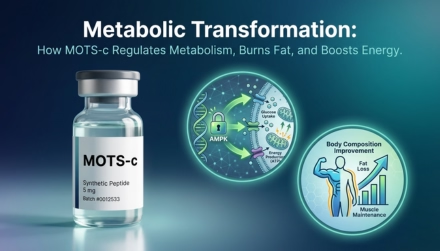
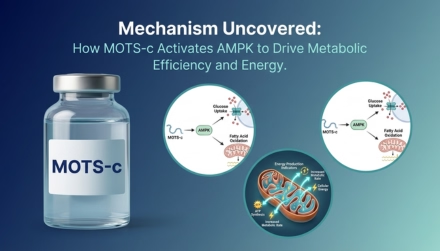
MOTS-c is produced in the mitochondria and is involved in various metabolic pathways. One of its primary functions is to activate AMP-activated protein kinase (AMPK), a key regulator of energy homeostasis. By activating AMPK, MOTS-c enhances glucose uptake and promotes fat oxidation.
MOTS-c: Mitochondrial Peptide for Muscle & Glucose Metabolism
Considering that mitochondria are the single most important metabolic organelle, it is not surprising that these MDPs have metabolic actions. MOTS-c has been shown to target the skeletal muscle and enhance glucose metabolism.
-- MOTS-c: a novel mitochondrial-derived peptide regulating muscle and fat metabolism, C Lee, 2016
| Category | Detail | Fat Reduction Impact |
|---|---|---|
| Mechanism -- AMPK Activation | Activates key energy homeostasis regulator | Increases energy expenditure and fat utilization |
| Mechanism -- Glucose Uptake | Enhances glucose uptake in muscle cells | Lowers blood sugar; improves insulin sensitivity |
| Mechanism -- Fat Oxidation | Stimulates fatty acid breakdown | Direct fat loss through enhanced oxidation |
| Mechanism -- Skeletal Muscle | Targets skeletal muscle metabolism | Implications for obesity and metabolic disorders |
| Clinical -- Metabolic Function | Enhances energy utilization and fat oxidation | Moderate evidence |
| Clinical -- Insulin Sensitivity | Reduces fat storage; improves blood sugar control | Moderate evidence |
| Clinical -- Exercise Endurance | Increases stamina and workout performance | Moderate evidence |
| Study -- OVX Mouse Model | Prevented obesity; increased brown fat activation | AMPK pathway improved energy dissipation |
How Does MOTS-c Enhance Metabolic Function to Promote Fat Loss?
MOTS-c enhances metabolic function through several mechanisms that collectively promote fat loss. By activating AMPK, it increases glucose uptake in muscle cells, lowering blood sugar levels and improving insulin sensitivity. Additionally, MOTS-c stimulates the breakdown of fatty acids, leading to enhanced fat oxidation. This dual action aids in weight loss and contributes to improved energy levels and overall metabolic health.
MOTS-C, a mitochondrial-derived peptide gaining significant attention in the research community, offers exciting possibilities for metabolic enhancement. The peptide works by enhancing glucose uptake in skeletal muscle, improving insulin sensitivity, and promoting metabolic flexibility.
What Are the Clinical Benefits and Evidence Supporting MOTS-c?
Key benefits include:
- Improved Metabolic Function: Enhances energy utilization and fat oxidation.
- Better Insulin Sensitivity: Reduces fat storage and improves blood sugar control.
- Enhanced Exercise Endurance: Increases stamina and performance during workouts.
Which recent clinical studies demonstrate MOTS-c's effectiveness for fat reduction?
A 2023 study highlighted significant improvements in body composition among participants, with notable fat loss and increased muscle mass. Animal research showed MOTS-c prevented ovariectomy-induced obesity, increased brown fat activation, and reduced fat accumulation via AMPK pathway activation.
What are the documented outcomes for fat reduction and energy enhancement?
Patients report significant fat loss (noticeable reduction in body fat percentage), increased energy levels with less daily fatigue, and improved metabolic markers including better insulin sensitivity and lower blood sugar levels.
How are MOTS-c treatments personalized?
The process begins with comprehensive medical evaluation of health history, lifestyle, and metabolic needs. A tailored dosing protocol is developed based on this assessment, with continuous monitoring and adjustments throughout treatment to ensure safety and efficacy.
What is the safety profile of MOTS-c for fat reduction?
MOTS-c is generally safe under physician supervision. Common side effects include mild injection site reactions (redness, swelling). Serious side effects are rare. Due to its mitochondrial origin, MOTS-c may have fewer side effects compared to other fat-burning peptides.
What do patients say about their MOTS-c experience?
Patient experiences have been overwhelmingly positive. Common themes include weight loss success, increased endurance and energy during physical activities, and improved blood sugar control. These testimonials highlight the transformative impact on metabolic health.
Recent Clinical Studies Demonstrating Effectiveness
Recent studies have provided valuable insights into MOTS-c effectiveness. A 2023 study highlighted significant improvements in body composition, with participants experiencing notable fat loss and increased muscle mass. Additionally, research has shown positive influence on metabolic markers.
MOTS-c for Obesity, Insulin Resistance & Fat Reduction
MOTS-c treatment in mice prevented ovariectomy-induced obesity and insulin resistance. MOTS-c treatment increased brown fat activation and reduced OVX-induced fat accumulation and inflammatory invasion in white adipose tissue, which contributes to the lower level of fatty acid in serum and liver. Moreover, MOTS-c activated AMPK pathway to improve energy dissipation and insulin sensitivity. In conclusion, MOTS-c is a high potential candidate for chronic treatment of menopausal induced metabolic dysfunction.
-- MOTS-c peptide regulates adipose homeostasis to prevent ovariectomy-induced metabolic dysfunction, 2019
| Category | Detail | Guidance |
|---|---|---|
| Safety -- Injection Site | Mild redness or swelling possible | Generally transient; proper technique essential |
| Safety -- Serious Effects | Rare | Discuss medical history with physician |
| Safety -- vs Other Peptides | Potentially fewer side effects (mitochondrial origin) | Favorable comparison to other fat-burning peptides |
| Personalization -- Evaluation | Medical history, lifestyle, metabolic needs | Comprehensive assessment before starting |
| Personalization -- Dosing | Tailored protocol based on evaluation | Ongoing adjustments for safety and efficacy |
| Outcome -- Fat Loss | Noticeable reduction in body fat percentage | Documented in patient reports |
| Outcome -- Energy | Increased energy; reduced fatigue | Frequently reported by patients |
| Outcome -- Metabolic Markers | Better insulin sensitivity; lower blood sugar | Observed across treatment populations |
| Payment -- FSA/HSA | May be eligible for reimbursement | Pre-tax dollars; verify with provider |
Documented Outcomes for Fat Reduction
- Significant Fat Loss: Patients experience noticeable reduction in body fat percentage.
- Increased Energy Levels: Many individuals report feeling more energetic and less fatigued.
- Improved Metabolic Markers: Enhanced insulin sensitivity and lower blood sugar levels are frequently observed.
Personalized Physician-Supervised Treatment
Treatment begins with comprehensive medical evaluation, followed by tailored dosing protocols and continuous monitoring. Physician supervision ensures safe and effective treatments, with adjustments made based on individual progress.
Safety Profile and Comparison
MOTS-c is generally safe under physician supervision with mild injection site reactions as the most common side effect. Due to its mitochondrial origin, studies indicate MOTS-c may have fewer side effects compared to other fat-burning peptides.
Patient Experiences
Patient testimonials consistently highlight weight loss success, increased endurance during physical activities, and improved blood sugar control. These outcomes illustrate the transformative impact of MOTS-c therapy on metabolic health and fat reduction.
Conclusion
MOTS-c peptide therapy targets fat reduction at the metabolic source: AMPK activation drives glucose uptake in skeletal muscle while simultaneously stimulating fatty acid breakdown for enhanced fat oxidation. This dual mechanism -- burning fat while improving how the body handles glucose -- sets MOTS-c apart from single-action fat loss interventions. The clinical evidence is converging: animal models show prevented obesity and brown fat activation, while patient outcomes demonstrate meaningful fat loss, improved energy, and better metabolic markers. Under physician supervision with personalized dosing, MOTS-c offers a mechanistically grounded, mitochondrial-targeted approach to fat reduction that works with the body's cellular energy systems rather than against them.
Disclaimer: This information is for educational purposes only and does not constitute medical advice. MOTS-c is a peptide therapy not currently FDA-approved. Always consult a licensed healthcare provider before starting, stopping, or changing any treatment. Individual results vary.